


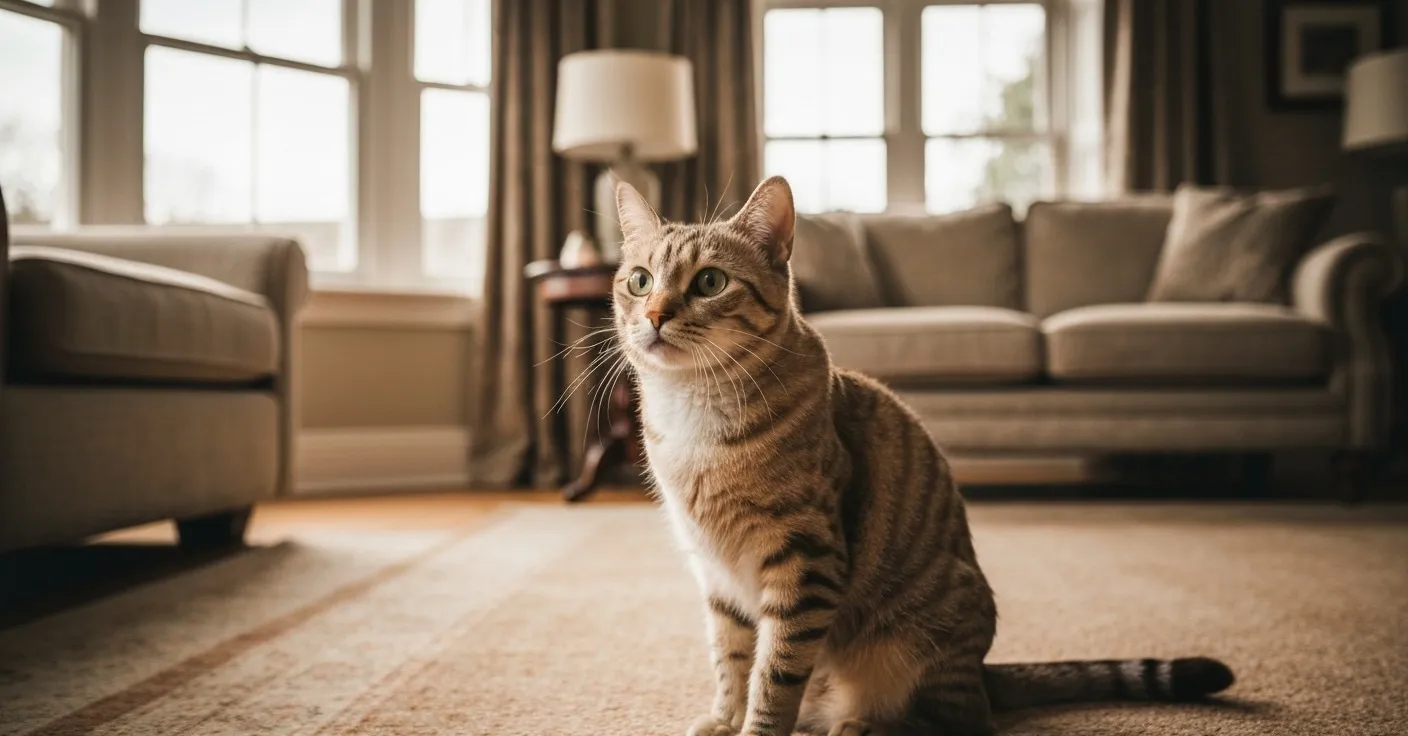
My client Sarah called me one February afternoon convinced her Maine Coon was seriously ill. Baxter had been retching two or three times a week, producing nothing, occasionally vomiting a cylindrical mass of matted fur. She’d already Googled “cat vomiting” and worked herself into a mild panic. Her previous vet had recommended a petroleum jelly-based paste and called it a day. Baxter kept retching.
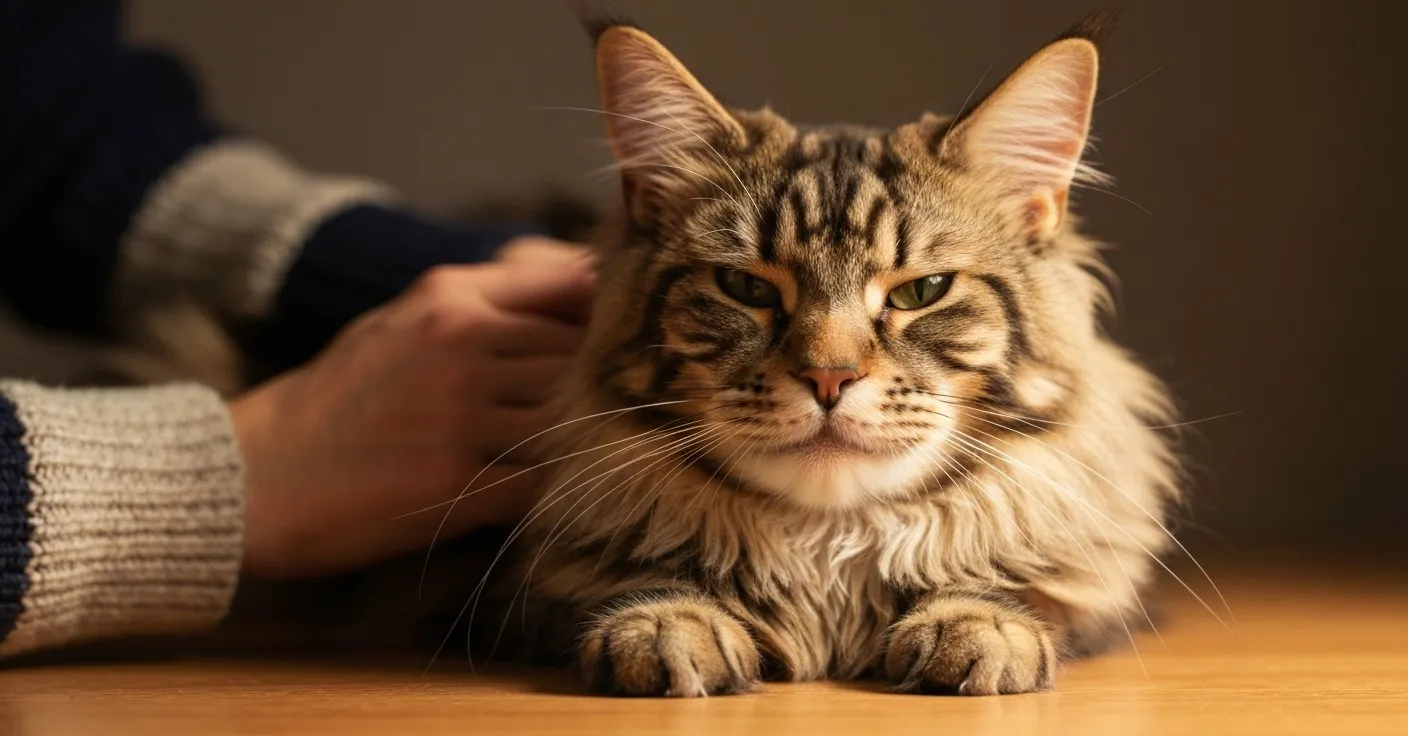
What Sarah didn’t know — and what that advice didn’t address — is that hairballs aren’t primarily a grooming problem. They’re a digestive one. Once we started treating Baxter’s gut rather than his coat, the episodes dropped from several a week to practically nothing inside six weeks.
Understanding why that worked requires a short detour into how the feline digestive system normally handles the enormous amount of hair cats swallow.
What actually happens when a cat gets a hairball
The clinical term is trichobezoar — a compacted mass of swallowed hair that forms in the stomach. Here’s the sequence: a cat grooms itself, the backward-facing spines on its tongue (called papillae) catch loose fur, and that fur is swallowed because there’s no other option. Most of it should pass uneventfully through the gastrointestinal tract and exit in the stool. When it doesn’t, it accumulates.
Hair is largely keratin — a fibrous structural protein that stomach acid doesn’t dissolve well. Small amounts pass through with normal peristaltic movement. Larger accumulations don’t. They compact. The stomach, recognizing an obstruction, attempts to expel the mass by reversing the direction of muscular contractions. That’s the retching and gagging you hear. If the mass is large enough and the stomach can’t push it back up, it may migrate into the small intestine, where it can cause a partial or complete obstruction — which is a genuine medical emergency.
Most hairballs are expelled without incident. The ones that aren’t, or the ones that keep forming despite intervention, signal something worth looking at more carefully.
Why some cats get them more often
Grooming frequency matters, but it isn’t the whole story. Long-haired breeds — Persians, Maine Coons, Ragdolls — ingest more hair per session by simple geometry. Cats undergoing seasonal shedding, or those that overgroom due to stress or skin conditions, also swallow more. But coat type and grooming habits explain only part of the variation.
Several other factors push cats toward chronic hairball formation:
Slow gut motility. When intestinal contractions are sluggish, hair lingers in the stomach and small intestine long enough to clump. This is arguably the most underappreciated driver.
Low dietary fiber. Fiber — both soluble and insoluble — plays a direct mechanical and biochemical role in moving gut contents through the tract. Cats eating low-residue, highly digestible diets may have reduced transit momentum.
Dehydration. Cats have a notoriously low thirst drive, a legacy of their desert ancestry. Chronically low water intake means less mucosal lubrication along the GI tract, which makes hair harder to propel forward.
Stress. Chronic stress elevates cortisol, which disrupts gut motility and can exacerbate overgrooming simultaneously. It’s a compounding problem.
Age. Older cats often have reduced gut motility simply due to age-related changes in the enteric nervous system.
The motility connection
This is the piece most hairball products quietly skip. Peristalsis — the rhythmic muscular contractions that move food, hair, and waste through the intestine — is controlled by the enteric nervous system, a vast network of neurons embedded in the gut wall. When peristalsis is compromised, even normal amounts of swallowed hair can accumulate.
Washabau and Holt (1999) documented feline gastrointestinal motility disorders comprehensively, noting that cats with chronic hairball problems frequently show measurable delays in gastric emptying and intestinal transit time that aren’t attributable to obstruction alone. The gut is moving too slowly. Hair that should transit in 12–24 hours stays for 48 or 72. Clumping follows.
This is why brushing your cat more often helps a little — less hair entering the system is always better — but doesn’t solve the problem if the underlying motility is slow. You’re reducing the input without addressing why the output is failing.
How the digestive system normally handles swallowed hair
In a well-functioning gut, swallowed hair moves through for several reasons working in concert. The mucus layer lining the intestinal wall provides lubrication, reducing friction so hair doesn’t catch and clump. Peristaltic waves push contents forward consistently. And the microbial ecosystem in the large intestine ferments undigested material — including some hair fiber — producing short-chain fatty acids (SCFAs) as a byproduct.
SCFAs aren’t just metabolic waste. They serve as fuel for colonocytes (the cells lining the colon), help maintain the mucus layer integrity, and — critically — stimulate further peristaltic activity through interactions with enteroendocrine cells (Topping & Clifton, 2001). It’s a reinforcing cycle: good fermentation supports motility, which supports transit, which prevents accumulation.
When the microbiome is disrupted — through antibiotics, dietary change, stress, or age — SCFA production drops. Motility slows. The protective loop breaks. Hair that should transit doesn’t.
Fiber’s role: soluble vs. insoluble
Not all fiber does the same thing, and conflating the two leads to products that help only partially.
Soluble fiber — psyllium husk is the most studied example — dissolves in water to form a gel. In the GI tract, that gel coats the mucosa, lubricates passage, and slows fermentation in a controlled way that feeds beneficial bacteria without causing rapid gas production. For a cat with slow transit, psyllium helps in two directions: it physically lubricates hair-laden gut contents and feeds the bacteria that produce motility-stimulating SCFAs. You can read more about the specific mechanism in our psyllium seed husk ingredient guide.
Insoluble fiber — cellulose, beet pulp — doesn’t dissolve. It adds bulk to stool, which stimulates mechanoreceptors in the intestinal wall and triggers peristaltic contractions. Useful for bulk and frequency, but it doesn’t provide the lubrication that soluble fiber does.
The most effective dietary approaches use both. Debraekeleer, Gross, and Zicker (2000) noted in their review of feline nutritional management that a combination of soluble and insoluble fiber sources tends to produce more consistent transit improvement than either source alone. The ratio matters; too much insoluble fiber without adequate moisture can actually worsen constipation in dehydrated cats.
This is also why pure cellulose-based hairball treats — the crunchy kind that cats seem to enjoy — have a ceiling on their effectiveness. They address bulk but not lubrication, and they don’t touch the motility question at all.
Keratinase: breaking down the hair itself
One enzyme in particular deserves attention that it rarely gets in consumer discussions: keratinase. Keratin is a notoriously stable protein — it resists gastric acid and most proteases. Keratinase is a bacterial-derived enzyme (originally isolated from Bacillus licheniformis and related strains) that cleaves keratin’s disulfide bonds, partially digesting the protein structure of hair before it can compact.
This is different from helping hair pass faster — it’s reducing the amount of intact hair available to form a trichobezoar in the first place. The hair is enzymatically broken down rather than simply propelled through as a solid mass. Clinical work in this area is still developing, but the mechanism is biochemically sound and complements fiber and probiotic strategies rather than replacing them.
Sherding (1994) described the keratin content of feline hair as a primary reason trichobezoars are so persistent; interventions that reduce keratin’s structural integrity represent a logical upstream approach.
Probiotics and motility
Here’s where the gut microbiome comes back into the picture — not as an afterthought but as a mechanism. The bacteria in a cat’s large intestine ferment fiber into SCFAs, principally acetate, propionate, and butyrate. Butyrate in particular has well-documented effects on colonocyte health and colonic motility. Topping and Clifton (2001) reviewed the physiology extensively, concluding that SCFA production from microbial fermentation is one of the primary drivers of colonic function in mammals.
For cats, this means that a disrupted microbiome isn’t just a diarrhea risk — it’s a motility risk. Probiotic supplementation with strains that colonize the feline gut and produce butyrate may help restore the SCFA-motility loop that sluggish guts have lost. This is also the connection between probiotics and hairball reduction that our guide on probiotics for cats covers in more depth.
The logic is circular in a productive way: probiotics support the bacteria that produce SCFAs; SCFAs stimulate peristalsis; better peristalsis means hair moves through rather than accumulating.
A combined approach
Given that slow motility, insufficient fiber, disrupted microbiome, and hair keratin are all contributing factors, a single-ingredient solution will almost always underperform. The most rational approach stacks interventions that address different parts of the problem simultaneously.
That’s the rationale behind formulas that combine probiotics with fiber and keratinase. Petterm Probiotic Hairball Control Powder combines a probiotic blend with keratinase enzyme and psyllium fiber — addressing the microbiome, the keratin structure of swallowed hair, and gut lubrication in a single daily supplement. Sarah’s Maine Coon, Baxter, was on a similar protocol. The retching episodes didn’t disappear overnight, but over six weeks the improvement was substantial and sustained.
That kind of result makes sense when you understand the mechanism. You’re not masking a symptom. You’re addressing three of the four root causes simultaneously.
What doesn’t work
Petroleum jelly and similar laxative pastes. These work on a narrow principle: coat the stomach contents so they slide through more easily. For an acute, isolated hairball, they can offer short-term relief. But they don’t address motility. They don’t feed the microbiome. They don’t break down keratin. Used repeatedly, there’s some concern that they may reduce fat-soluble vitamin absorption — German (2009) noted in his review of feline nutritional management that repeated lipid-based laxatives can interfere with fat-soluble nutrient uptake over time. They’re not dangerous in occasional use, but they’re not a solution.
Pure cellulose hairball treats. As described above, these provide insoluble bulk without lubrication or microbiome support. They’re useful as a component but not as a standalone strategy. Many cats also find them palatable enough to eat eagerly, which makes them feel like they’re doing something — and they’re not harmful — but the ceiling is low.
More frequent brushing alone. Essential, and not optional if your cat is long-haired. But if the gut is slow, reducing hair input doesn’t restart peristalsis. It just delays the accumulation.
The pattern across all three is the same: they address one variable in a multi-variable problem. When hairballs are occasional and your cat is otherwise healthy, any of these might be sufficient. When they’re chronic, the motility question demands attention.
Frequently asked questions
How often is “normal” for hairballs? Most veterinary sources consider one hairball per one to two weeks tolerable in long-haired breeds, though less frequent is always better. If your cat is vomiting hair more than once or twice a week, or retching without producing anything, that warrants investigation.
Do short-haired cats get hairballs? Yes, though less frequently. All cats groom; all cats swallow some hair. Domestic shorthairs with slow gut motility can develop trichobezoars despite their shorter coats.
Is vomiting a hairball the same as vomiting from illness? Not necessarily, but distinguishing them requires observation. A hairball vomit typically produces a cylinder of compressed fur, often with some bile or mucus. Repeated retching that produces nothing — or vomit that doesn’t contain hair — should be evaluated by a vet.
Can I use psyllium husk from a human product? Plain, unflavored psyllium husk powder is generally the same compound, but human products may contain sweeteners (including xylitol, which is toxic to some pets) or flavorings that aren’t appropriate for cats. Use formulations specifically labeled for cats.
How long before I see improvement with a probiotic and fiber supplement? Most cats show measurable improvement in stool consistency within 7–14 days. Hairball frequency reduction tends to be more gradual — expect 4–8 weeks of consistent supplementation before drawing conclusions.
Should I change my cat’s food too? Increasing overall moisture intake (wet food or water fountain) and moving to a diet with mixed fiber sources can meaningfully support the supplementation. Diet alone often isn’t enough for chronic cases, but it’s a useful foundation.
When to contact your veterinarian
Watch and support at home: occasional hairball (less than once per week), normal appetite and activity between episodes, no retching without production. This is a good situation to trial dietary changes and a combined fiber/probiotic supplement.
Call your vet within 24–48 hours if your cat is retching without producing anything more than once, is vomiting hairballs more than twice a week, has a noticeably reduced appetite that lasts more than 24 hours, or seems more lethargic than usual.
Seek same-day care if your cat is retching or gagging persistently and can’t settle, shows signs of obstruction (complete loss of appetite, obvious lethargy, a visibly distended abdomen), hasn’t produced stool in more than three days, or is showing signs of pain when you touch their abdomen. Intestinal obstruction is a surgical emergency. Don’t wait.
References
- Washabau, R.J. & Holt, D. (1999). Feline gastrointestinal motility disorders. Veterinary Clinics of North America: Small Animal Practice, 29(2), 481–486.
- Topping, D.L. & Clifton, P.M. (2001). Short-chain fatty acids and human colonic function: roles of resistant starch and nonstarch polysaccharides. Physiological Reviews, 81(3), 1031–1064.
- Debraekeleer, J., Gross, K.L., & Zicker, S.C. (2000). Feeding growing kittens. In: Small Animal Clinical Nutrition, 4th ed. Walsworth Publishing.
- Sherding, R.G. (1994). Diseases of the intestines. In: Birchard SJ, Sherding RG, eds. Saunders Manual of Small Animal Practice. WB Saunders.
- German, A.J. (2009). Nutritional management of obesity in cats and dogs. Journal of Veterinary Internal Medicine, 23(6), 1200–1208.
This article is for educational purposes and is not veterinary medical advice. Petterm products are not intended to diagnose, treat, cure, or prevent any disease. Results may vary. Always consult your veterinarian before introducing a new supplement, especially if your cat has an existing condition, takes medication, is pregnant, or is under 8 weeks old.