


When my neighbor’s Persian started refusing breakfast every other day last spring, the vet didn’t prescribe medication. She suggested a two-week probiotic trial. Within ten days the cat was eating normally, and my neighbor became one of those people who won’t stop talking about gut bacteria at dinner parties.
That story isn’t unusual. The body of veterinary research around feline probiotics has grown substantially over the past decade, and the findings reach further than most pet owners realize. Probiotics aren’t just for upset stomachs; they participate in immune regulation, nutrient absorption, and even behavioral patterns tied to the gut-brain axis.
Here are seven benefits that clinical and preclinical studies have linked to probiotic supplementation in cats, along with the context you need to decide whether your cat could benefit.
1. Restoring balance after antibiotics and dietary changes
Antibiotics are lifesaving, but they are indiscriminate. A course of amoxicillin doesn’t differentiate between pathogenic E. coli and the beneficial Lactobacillus strains that keep the intestinal lining intact. A 2019 study published in the Journal of Veterinary Internal Medicine found that antibiotic-treated cats showed significant reductions in microbial diversity that persisted for weeks after treatment ended (Suchodolski et al., 2019).
Probiotic supplementation during and after antibiotic therapy may help repopulate depleted colonies faster. The principle is straightforward: you’re reintroducing known beneficial organisms rather than leaving the ecological niche open for opportunistic species.
The same logic applies to dietary transitions. Switching a cat from one food to another alters the substrate available to gut bacteria. A gradual transition helps, but pairing it with a probiotic can smooth the process further, particularly for cats with a history of soft stools during food changes.
Practical note: If your cat is currently on antibiotics, space the probiotic dose at least two hours apart from the antibiotic to reduce the chance of the drug killing the live cultures before they reach the intestine.
2. Supporting immune function through the gut
Roughly 70% of the feline immune system resides in the gut-associated lymphoid tissue, or GALT (Tizard, 2018). This isn’t a peripheral detail; it’s the architectural foundation for understanding why digestive health ripples outward into systemic immunity.
Lactobacillus and Bifidobacterium strains, the two genera most commonly used in feline probiotics, have been shown to modulate cytokine production and enhance secretory IgA output in animal models (Marshall-Jones et al., 2006). Secretory IgA is the mucosal immune system’s first line of defense against pathogens entering through the gut lining.
For indoor cats, whose immune systems face fewer challenges than their outdoor counterparts, this might seem less urgent. But indoor cats are also more likely to experience low-grade chronic stress from environmental monotony, which has its own suppressive effect on immune function. A well-maintained gut microbiome acts as a buffer.
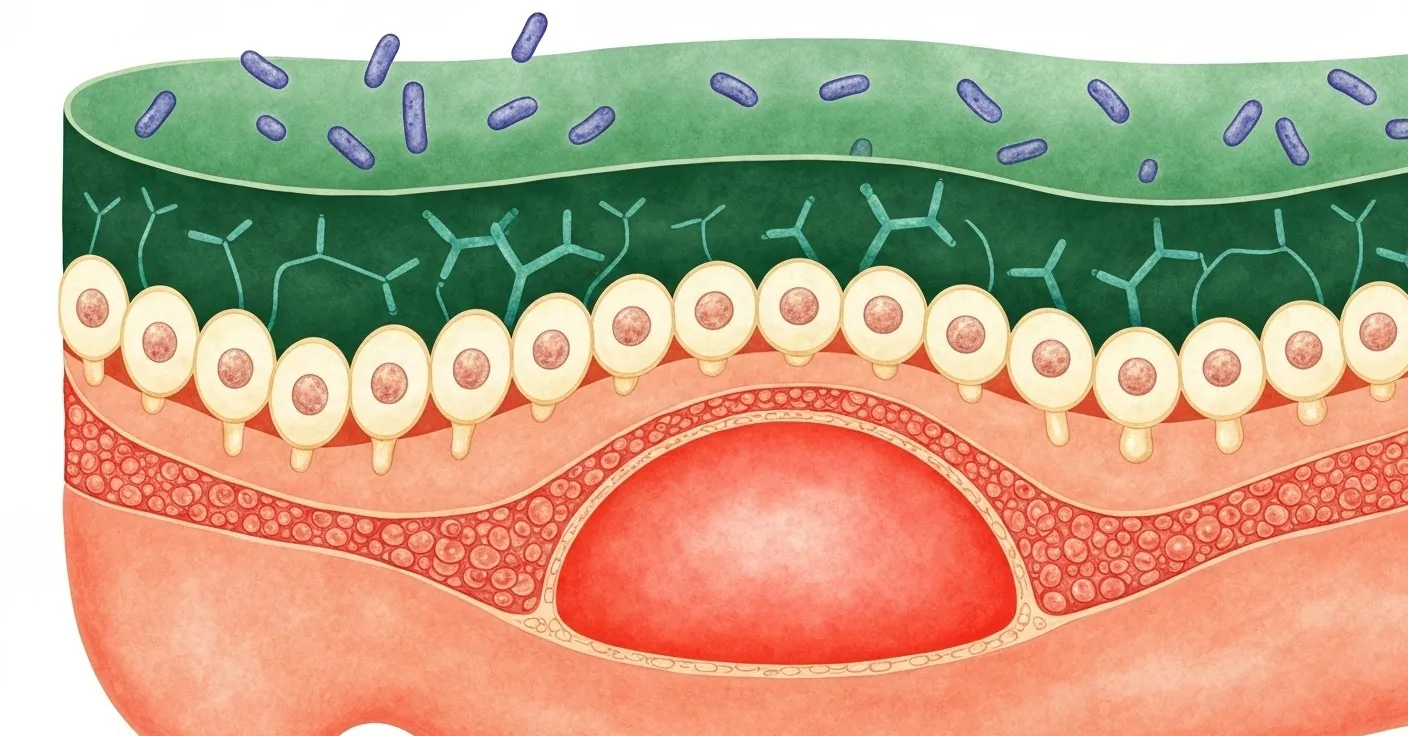
Illustration key: green — mucus layer; cream — epithelial cells; violet — Lactobacillus bacteria; teal — IgA antibodies; coral — Peyer’s patch lymphoid aggregate.
3. Reducing hairball frequency through improved gut motility
Here’s one that doesn’t get enough attention. Hairballs are fundamentally a motility problem. Cats ingest hair during grooming, and in a healthy digestive tract, that hair moves through and exits in the stool. When gut motility slows, whether from dehydration, low fiber, or microbial imbalance, hair accumulates in the stomach and forms a trichobezoar.
Probiotics contribute to motility in two ways. First, certain strains produce short-chain fatty acids (SCFAs) that stimulate peristalsis, the wave-like contractions that push content through the GI tract (Topping & Clifton, 2001). Second, a balanced microbiome supports the mucus layer that lubricates the intestinal wall, reducing friction and transit time.
A formula that combines probiotics with digestive enzymes like keratinase, which breaks down keratin (the primary structural protein in hair), and soluble fiber like psyllium husk approaches the hairball problem from multiple angles simultaneously.
If hairball frequency is your primary concern, take a look at our deep dive into how psyllium seed husk supports feline digestion and our full guide on why cats get hairballs and what actually helps.
4. Easing symptoms of inflammatory bowel disease (IBD)
Feline IBD is characterized by chronic infiltration of inflammatory cells into the gastrointestinal wall, and it remains one of the more frustrating diagnoses for both veterinarians and cat owners. Treatment typically involves immunosuppressive drugs and dietary management, but probiotics are increasingly discussed as an adjunctive strategy.
A 2011 study in cats with chronic GI inflammation found that supplementation with Enterococcus faecium SF68 resulted in higher fecal IgA concentrations and improved stool quality compared to placebo (Veir et al., 2008). The authors noted that while probiotics didn’t replace pharmaceutical management, they appeared to complement it.
The mechanism likely involves competitive exclusion, where beneficial bacteria occupy binding sites on the intestinal epithelium that would otherwise be available to pro-inflammatory organisms, and direct modulation of the local immune response.
Important: IBD requires veterinary diagnosis and management. Probiotics are not a substitute for prescribed treatment, but they may be a useful addition to the overall care plan.
5. Improving nutrient absorption
A cat can eat the most expensive, nutritionally complete food on the market and still miss out on a significant portion of its value if the gut microbiome isn’t functioning properly. Nutrient absorption depends on enzymatic breakdown, mucosal integrity, and the presence of specific bacterial populations that synthesize vitamins and cofactors.
Bifidobacterium species, for instance, are involved in the production of B vitamins and vitamin K in the colon (LeBlanc et al., 2013). Lactobacillus strains help maintain the tight junctions between intestinal epithelial cells, preventing the “leaky gut” phenomenon where partially digested proteins and toxins enter the bloodstream.
For cats transitioning to a new diet, recovering from illness, or simply showing signs of a dull coat despite adequate nutrition, suboptimal absorption is worth considering as a contributing factor.
6. Modulating stress-related digestive upset
The gut-brain axis is not a metaphor. The enteric nervous system contains roughly 100 million neurons in cats, and it communicates bidirectionally with the central nervous system via the vagus nerve (Furness, 2012). Stress, whether from a new household member, a move, or a trip to the vet, triggers measurable changes in gut motility, acid secretion, and microbial composition.
Cats that develop soft stools, appetite loss, or vomiting around stressful events may benefit from probiotic support that stabilizes the microbial environment during these disruptions. A 2016 study in shelter cats showed that probiotic-supplemented cats had significantly fewer days of diarrhea compared to controls, a finding with obvious implications for any cat experiencing environmental stress (Bybee et al., 2011).
If your cat tends to stop eating during boarding or hides for days after visitors leave, starting a daily probiotic routine a few days before the anticipated stressor is worth discussing with your veterinarian.
7. Supporting oral health through microbial competition
This one surprises most cat owners. The oral cavity has its own microbiome, and the composition of bacteria in the mouth is influenced by the bacteria in the gut. Periodontal disease affects an estimated 50-90% of cats over four years of age (Lommer, 2013), and while probiotics won’t replace dental cleanings, emerging research suggests they may influence the oral microbial environment.
A randomized controlled trial in dogs (the feline-specific data is still catching up) demonstrated that oral administration of Lactobacillus reuteri reduced gingival inflammation scores over a 30-day period (Schmid et al., 2021). The proposed mechanism is competitive inhibition of pathogenic oral bacteria by beneficial strains that colonize the oral mucosa.
For cats that resist tooth brushing, which is to say most cats, any additional strategy that may support oral health is worth noting.
How to choose a probiotic for your cat
Not all probiotic products deliver equivalent results. A few criteria matter more than the rest:
-
Strain specificity. Look for products that list specific strains (e.g., Lactobacillus acidophilus, Bifidobacterium animalis), not just genus-level identifiers. Different strains within the same species can have dramatically different effects.
-
CFU count. Colony-forming units indicate the number of viable organisms per dose. For cats, products in the range of 1 to 10 billion CFU per serving are typical. More isn’t necessarily better; what matters is that the count is sufficient to survive gastric acid and reach the intestine.
-
Complementary ingredients. A formula that pairs probiotics with prebiotics (the fiber that feeds beneficial bacteria), digestive enzymes, and functional ingredients like psyllium seed husk can address gut health from multiple angles. This is the approach behind Petterm’s Probiotic Hairball Control Powder, which combines 6 billion CFU of Lactobacillus and Bifidobacterium strains with keratinase, papain, and bromelain to support both digestion and hairball management.
-
Format and palatability. The best probiotic is the one your cat will actually eat. Powders that mix into wet food tend to have higher acceptance rates than capsules or tablets.
Final thoughts
The gut microbiome is not a static system; it’s a living ecology that responds to diet, stress, medication, and age. Probiotics offer a way to support that ecology in a direction that favors your cat’s health, and the research continues to strengthen.
Whether your cat is dealing with hairballs, recovering from antibiotics, or you’re simply looking to support long-term wellness, probiotics are one of the more evidence-supported nutritional tools available. Pair them with a species-appropriate diet, adequate hydration, and regular veterinary check-ups, and you’re covering the fundamentals well.
Frequently asked questions
Can I give my cat human probiotics?
It’s not recommended. Human formulations often contain strains, dosages, and inactive ingredients that haven’t been evaluated for feline safety. Some human probiotics include sweeteners like xylitol, which is toxic to animals. Stick with products formulated specifically for cats.
How long does it take to see results?
Most studies report observable changes within two to four weeks of consistent daily supplementation. Acute digestive issues (antibiotic-related diarrhea, food transition upset) may respond sooner. Chronic conditions like IBD-associated symptoms typically require longer supplementation periods.
Can kittens take probiotics?
Generally, yes. Several probiotic strains have been studied in kittens without adverse effects. However, kittens under eight weeks should receive probiotics only under veterinary guidance, as their gut microbiome is still establishing its baseline composition.
Should I refrigerate cat probiotics?
It depends on the formulation. Some products use freeze-dried or microencapsulated strains that are shelf-stable at room temperature. Others require refrigeration to maintain viability. Check the label instructions for your specific product.
Can I give probiotics alongside other supplements?
In most cases, yes. Probiotics are generally compatible with vitamins, omega fatty acids, and other common supplements. If your cat is on tear stain support or other Petterm supplements, spacing doses by 30 minutes is a reasonable precaution, though no interactions have been reported.
When to contact your veterinarian
A probiotic is a daily nutritional support tool, not a substitute for veterinary care. Call your vet within 24–48 hours if your cat shows diarrhea lasting more than two days, repeated vomiting, visible weight loss, or a noticeable drop in appetite. Seek veterinary care the same day for bloody stool, lethargy, signs of dehydration (tacky gums, skin tenting), or a hairball episode that looks like ongoing retching without production. Sudden changes in older cats deserve prompt evaluation regardless of how mild they seem.
References
-
Suchodolski, J.S., et al. (2019). “Fecal microbiome in cats with chronic enteropathies.” Journal of Veterinary Internal Medicine, 33(4), 1507-1515.
-
Tizard, I.R. (2018). Veterinary Immunology: An Introduction. 10th ed. Elsevier.
-
Marshall-Jones, Z.V., et al. (2006). “Effects of Lactobacillus acidophilus DSM13241 as a probiotic in healthy adult cats.” American Journal of Veterinary Research, 67(6), 1005-1012.
-
Topping, D.L. & Clifton, P.M. (2001). “Short-chain fatty acids and human colonic function: roles of resistant starch and nonstarch polysaccharides.” Physiological Reviews, 81(3), 1031-1064.
-
Veir, J.K., et al. (2008). “Effect of supplementation with Enterococcus faecium SF68 on immune functions in cats.” Veterinary Therapeutics, 9(4), 263-272.
-
LeBlanc, J.G., et al. (2013). “Bacteria as vitamin suppliers to their host: a gut microbiota perspective.” Current Opinion in Biotechnology, 24(2), 160-168.
-
Furness, J.B. (2012). “The enteric nervous system and neurogastroenterology.” Nature Reviews Gastroenterology & Hepatology, 9(5), 286-294.
-
Bybee, S.N., et al. (2011). “Effect of the probiotic Enterococcus faecium SF68 on presence of diarrhea in cats and dogs housed in an animal shelter.” Journal of Veterinary Internal Medicine, 25(4), 856-860.
-
Lommer, M.J. (2013). “Oral inflammation in small animals.” Veterinary Clinics of North America: Small Animal Practice, 43(3), 555-571.
-
Schmid, S.M., et al. (2021). “Oral administration of Lactobacillus reuteri and its effect on gingival health in dogs: a randomized controlled trial.” Journal of Veterinary Dentistry, 38(2), 75-82.
Researched and reviewed by the Petterm Editorial Team · Last reviewed April 2026
This article is for educational purposes and is not veterinary medical advice. Petterm products are not intended to diagnose, treat, cure, or prevent any disease. Results may vary. Always consult your veterinarian before introducing a new supplement, especially if your cat has an existing condition, takes medication, is pregnant, or is under 8 weeks old.