


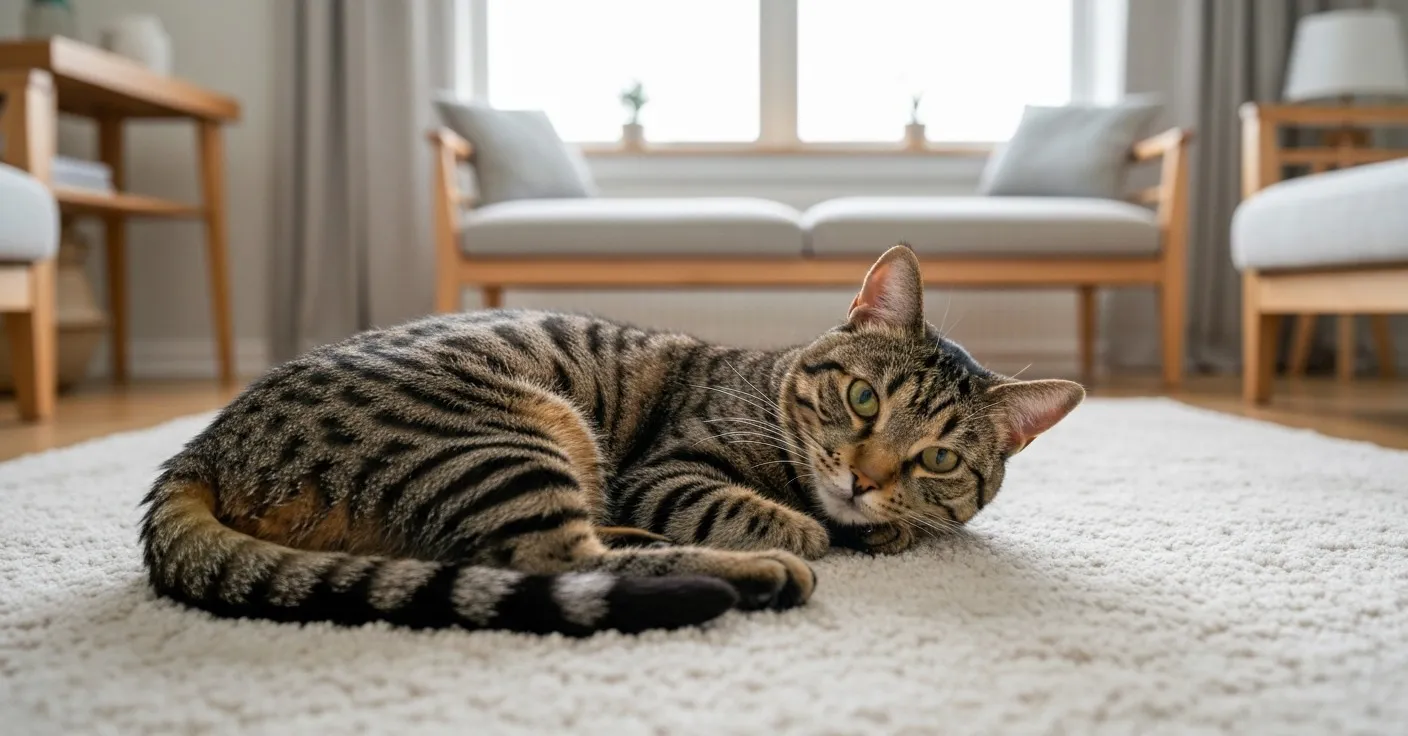
For three months, my client Marcus thought his seven-year-old tabby, Olive, was developing arthritis. She’d stopped jumping onto the couch. She moved more slowly around the apartment. She groomed less. When she finally stopped eating reliably, he brought her in. X-rays showed no joint changes. Blood work flagged low-grade systemic inflammation. An intestinal biopsy confirmed what the constellation of symptoms had been quietly suggesting: chronic GI inflammation that had been building for months before it became obvious.
Olive hadn’t said a word about any of it.
That’s the thing about gut problems in cats. They rarely announce themselves dramatically at first. They show up sideways — a posture change, a coat that lost its gloss, a litter box pattern that shifted without obvious cause. By the time many owners recognize a GI issue for what it is, the problem has been developing for weeks or months.
Knowing what to look for changes that calculus. About 70% of the feline immune system is housed in the gut-associated lymphoid tissue (Tizard, 2018), which means disruptions in the gut don’t stay contained there — they ripple outward into immunity, energy, coat quality, and even behavior. The seven signs below are the ones that most commonly appear before a feline gut problem escalates into something harder to address.
Sign 1: Chronic soft stools or intermittent diarrhea
A single bout of loose stool after a food change or a stressful event is normal and usually self-resolving. That’s not what this sign is about. The pattern worth noting is soft or unformed stools appearing more than twice a week over several weeks — especially without a clear acute cause like an illness or a new food.
Chronic soft stools typically indicate one of a few things: microbial dysbiosis (an imbalance in the bacterial populations of the gut), insufficient dietary fiber, food sensitivity, or low-grade inflammatory bowel disease. Jergens (2012) reviewed feline idiopathic inflammatory bowel disease extensively, noting that chronic, intermittent diarrhea is the most common presenting complaint and that it frequently predates formal diagnosis by many months.
The stool consistency scoring system most veterinary clinics use runs from 1 (hard, dry pellets) to 7 (liquid with no form). Stools at 5 or 6 — soft, moist, losing their defined shape — on a consistent basis are a signal worth taking seriously, even if your cat seems otherwise comfortable.
What it doesn’t mean: a single day of loose stool, especially after a dietary indiscretion or travel, is not a gut health crisis. Context and pattern matter.
Sign 2: Excessive hairballs
Most cat owners accept hairballs as an inevitable part of feline life. They’re not entirely wrong. All cats groom; all cats swallow some hair; the occasional hairball is normal, particularly in long-haired breeds. But chronic, frequent hairballs — more than once or twice a week, or persistent retching without production — point to something beyond coat type.
The connection is gut motility. In a well-functioning digestive tract, swallowed hair passes through with normal peristaltic movement and exits in the stool. When gut motility is slow, hair lingers in the stomach long enough to compact into a trichobezoar. Dysbiosis makes this worse: a disrupted microbiome produces fewer of the short-chain fatty acids that stimulate peristaltic activity, which slows transit further.
Frequent hairballs, in other words, are often a motility symptom dressed up as a grooming symptom. You can read the full breakdown of this mechanism in our article on hairball causes and prevention. The short version: if the brushing and the petroleum jelly paste aren’t making a dent, the gut is where to look.
Sign 3: Bloating or audible gut sounds
A cat’s abdomen should feel soft and non-distended to gentle palpation. Some gut sounds — a faint gurgling — are normal, the sound of peristalsis doing its job. Loud, frequent borborygmi (the clinical term for excessive GI noise) or a visibly rounded abdomen that wasn’t there before are different.
Excessive gas production is typically a sign of fermentation imbalance. The gut microbiome ferments undigested carbohydrates and fiber, producing gas as a byproduct. In a healthy microbiome, this process is regulated and the gas is absorbed or expelled normally. In a dysbiotic gut, certain bacterial populations produce gas at rates that exceed the body’s capacity to manage it quietly. The result is audible — and sometimes visible.
Suchodolski (2011) described how dysbiotic shifts in feline gut microbiota toward gas-producing anaerobic bacteria correlate with clinical signs including bloating and flatulence. It isn’t just an aesthetic issue; the underlying fermentation imbalance affects nutrient absorption and mucosal integrity at the same time.
A distended, painful, or board-hard abdomen is a different matter entirely — that’s an emergency presentation, not a gut health sign to monitor at home.
Sign 4: Dull or flaky coat
A cat’s coat is often described as a window into their overall health, and that description is biochemically accurate. The skin and hair follicles require a continuous supply of B vitamins (particularly biotin and B12), essential fatty acids, and zinc to maintain normal structure and gloss. The gut is responsible for absorbing all of them.
When gut health deteriorates, absorption capacity drops. Inflammation in the intestinal lining disrupts the surface area available for nutrient uptake. Dysbiosis reduces the resident bacteria that synthesize vitamins — LeBlanc et al. (2013) showed that gut bacteria are significant suppliers of B vitamins to their mammalian hosts, and that reductions in microbial diversity directly affect host vitamin status.
The practical result: a coat that was once dense and lustrous becomes dull, greasy at the skin, or visibly flaky. Some cats also develop patchy fur or increased shedding. These changes are slow. They accumulate over weeks to months, which is why they’re easy to attribute to aging or season rather than gut function.
If your cat’s coat has changed noticeably and you’ve ruled out external parasites and dermatological conditions, the gut is a reasonable next place to investigate.
Sign 5: Food sensitivities or pickiness that developed suddenly
Cats that previously ate one food reliably and begin refusing it — or that develop apparent reactions (vomiting, soft stool) to foods they previously tolerated — often have an underlying gut barrier issue.
Increased intestinal permeability, sometimes called “leaky gut,” occurs when the tight junction proteins that hold intestinal epithelial cells together are compromised. The result is that larger, partially-digested protein molecules can cross the intestinal lining and interact with the immune system on the other side. The immune system, encountering these proteins outside their normal route, may mount an inflammatory response. Over time, this can manifest as apparent sensitivity to foods that were previously non-reactive.
This isn’t the same as a true food allergy (which is an IgE-mediated response with a more defined onset), but it produces similar clinical signs: vomiting, soft stool, skin reactions, or refusal to eat following meals. The distinction matters because the management is different — addressing the gut barrier is a prerequisite for resolving the sensitivity pattern.
Sudden pickiness that isn’t explained by a food formula change, dental pain, or nausea from another condition is worth tracking. If it persists beyond a week, it’s a vet conversation.
Sign 6: Lethargy and reduced activity
This one brought Olive to the clinic. Her owners read it as joint pain. The mechanism was actually systemic inflammation driven by gut dysbiosis.
When the intestinal microbiome is out of balance, pro-inflammatory cytokines can enter systemic circulation through the compromised gut lining. Chronic low-grade inflammation has a measurable effect on energy levels — not because the cat is acutely ill, but because the immune system is running a slow, continuous drain on metabolic resources.
Jergens (2012) noted that lethargy and reduced activity are among the most common owner complaints in cats later diagnosed with inflammatory bowel disease, and that owners rarely connect the activity change to a digestive problem. The assumption is usually orthopedic or neurological.
This sign is difficult to read in isolation because lethargy has many causes. The context that makes it worth pursuing as a gut sign: it accompanies one or more of the other signs on this list, it developed gradually rather than suddenly, and the cat has no other obvious explanation (recent vaccination, seasonal temperature, new household stress).
Sign 7: Increased anxiety or hiding
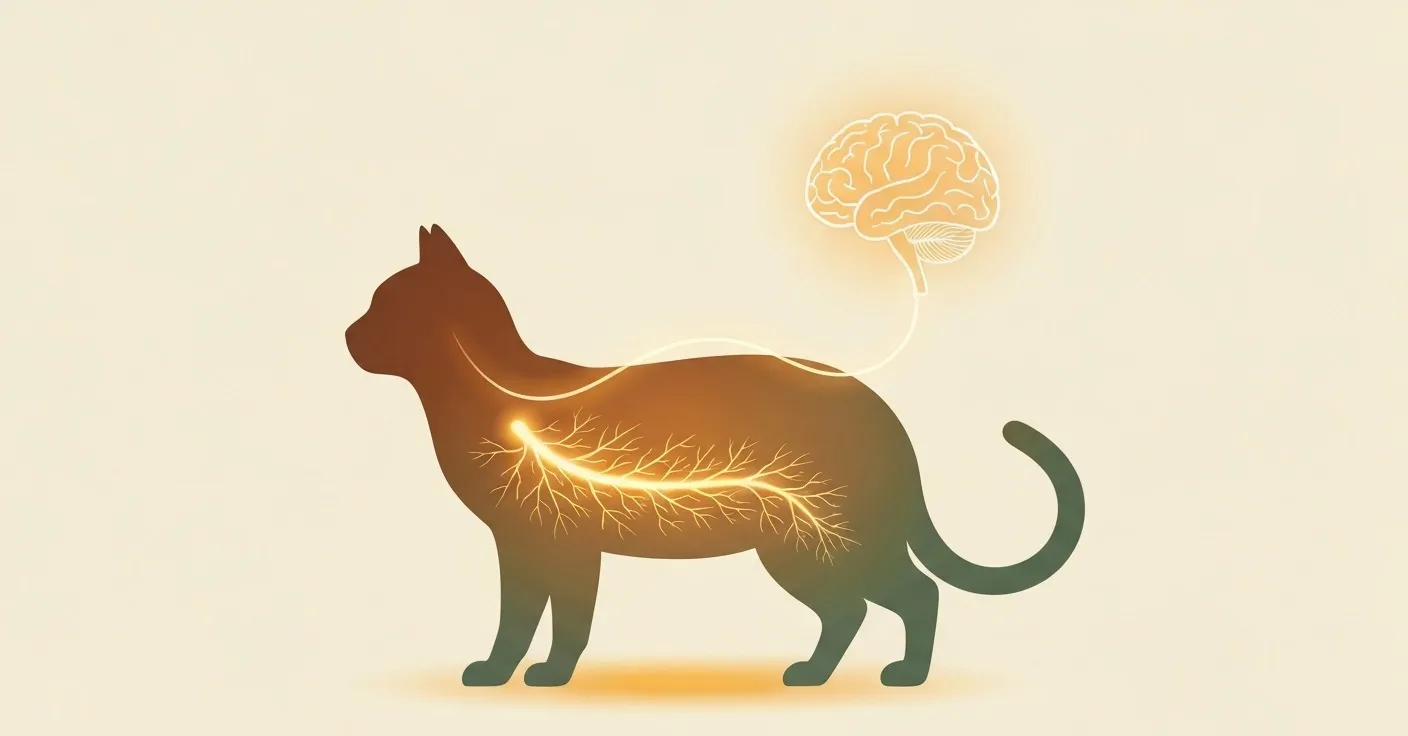
The gut-brain axis is a bidirectional communication network between the enteric nervous system — the “second brain” embedded in the walls of the GI tract — and the central nervous system. Furness (2012) described the enteric nervous system as a largely autonomous system capable of regulating gut function independently, but one that also communicates extensively with the vagus nerve and, through it, the brain.
The microbiome participates in this communication. Gut bacteria produce and modulate neurotransmitter precursors — including serotonin, GABA, and dopamine precursors — that influence mood and stress response. When gut bacteria populations shift, neurotransmitter signaling shifts with them.
In cats, this can manifest as increased anxiety, heightened startle response, more time spent hiding, or reduced social interaction with familiar humans. These behavioral changes are subtle enough that most owners assume a social or environmental cause. Sometimes that’s correct. But a cat that has become notably more anxious or withdrawn without an obvious environmental trigger, particularly when that change accompanies digestive symptoms, is a candidate for gut-brain axis evaluation.
Treating the gut can have non-digestive effects. Cats that receive appropriate microbiome support sometimes show behavioral improvements that owners weren’t expecting.
What connects all seven signs
The common thread is the microbiome — or more precisely, what happens when it’s disrupted.
A healthy feline gut microbiome does several things simultaneously: it ferments fiber into SCFAs that fuel the intestinal lining and stimulate motility; it competes with pathogenic organisms for ecological space; it synthesizes vitamins that the host can’t produce independently; it maintains the tight junction integrity that keeps the gut barrier intact; and it communicates with the immune and nervous systems in ways that affect the whole body.
Dysbiosis — a shift in the composition or diversity of the microbial community — disrupts all of these functions to varying degrees. The specific sign that appears most prominently in a given cat depends on which function is most compromised, which existing vulnerabilities the cat has, and how long the disruption has been running.
This is why the seven signs above can appear in isolation or in combination, and why they seem unrelated until you trace them back to their common origin. Suchodolski (2011) noted that feline gut microbial ecology is still being characterized, but the consequences of disruption are clinically consistent across cases.
How to support gut health proactively
Dietary consistency is the foundation. Frequent food changes disrupt the microbial populations adapted to specific substrates. If you need to switch foods, transition over 7–10 days. Moisture matters too — a combination of wet food and fresh water supports the mucosal layer and GI transit.
Fiber plays a structural role, as described in our guide on probiotics for cats. Soluble fiber (psyllium husk) provides the gel layer that lubricates transit and feeds beneficial bacteria. Insoluble fiber (beet pulp, cellulose) adds bulk and stimulates mechanical contractions. A good gut support formula includes both.
Probiotic supplementation helps restore and maintain microbial diversity, particularly after disruptions from antibiotics, dietary stress, or illness. For cats showing any combination of the seven signs above, Petterm Probiotic Hairball Control Powder offers daily probiotic support alongside psyllium fiber — a combination that addresses both the microbial and mechanical dimensions of gut health in one daily supplement.
None of this replaces veterinary evaluation when signs are persistent or worsening. But for cats showing early or mild signs, consistent daily support may help the gut self-correct before problems compound.
Frequently asked questions
How do I know if my cat’s soft stools are a gut health issue or just a bad food day? Pattern is everything. A single episode after a dietary change or stressful event isn’t cause for concern. Soft stools appearing three or more times a week over two or more weeks — without a clear acute cause — warrant attention.
My cat seems fine otherwise. Does a dull coat really mean something is wrong internally? Not necessarily on its own. A dull coat can reflect poor-quality food, dehydration, seasonal coat change, or age. But when it appears alongside one or more of the other signs on this list, it’s worth considering gut absorption as a contributing factor.
Can probiotics make things worse if my cat has diarrhea? Probiotics are generally safe during diarrhea episodes and are often used to support recovery. The exception is cats with severe immunosuppression or a bacterial infection needing targeted treatment — check with your vet before starting any supplement in those cases.
Is gut dysbiosis the same as inflammatory bowel disease? Not exactly. Dysbiosis is a microbial imbalance; IBD is an immune-mediated inflammatory condition in the intestinal wall. They frequently co-occur and worsen each other, but they’re distinct diagnoses with different management protocols.
How long before gut health improvements show up visibly? Stool quality often improves within 7–14 days of consistent probiotic and dietary support. Coat changes take longer — expect 6–8 weeks before meaningful improvement is visible. Energy and behavioral changes tend to improve in parallel with stool normalization.
My cat has been on a probiotic for a month and still has soft stools. What now? That’s a vet conversation. Persistent diarrhea that doesn’t respond to dietary and probiotic management may indicate IBD, parasites, or another condition requiring targeted diagnosis.
When to contact your veterinarian
Watch and support at home: mild, intermittent soft stools (no more than twice a week), occasional hairballs, a slightly duller coat than usual, or minor changes in activity that came on gradually. Start with dietary consistency, increase moisture intake, and try a probiotic with fiber support for 3–4 weeks.
Call your vet within 24–48 hours if diarrhea persists for more than two days despite dietary management, your cat has lost noticeable weight over the past 2–4 weeks, vomiting is occurring more than twice a week, the coat is visibly deteriorating rather than slowly changing, or any single sign is worsening rather than stable.
Seek same-day care if you see blood in the stool, your cat has completely stopped eating, you observe lethargy combined with dehydration signs (skin tenting, dry gums, sunken eyes), your cat is vomiting persistently and can’t keep water down, or the abdomen appears distended or is painful to the touch. These signs together may indicate a serious condition requiring urgent evaluation.
References
- Tizard, I.R. (2018). Veterinary Immunology: An Introduction. 10th ed. Elsevier.
- Furness, J.B. (2012). The enteric nervous system and neurogastroenterology. Nature Reviews Gastroenterology & Hepatology, 9(5), 286–294.
- LeBlanc, J.G., et al. (2013). Bacteria as vitamin suppliers to their host: a gut microbiota perspective. Current Opinion in Biotechnology, 24(2), 160–168.
- Suchodolski, J.S. (2011). Intestinal microbiota of dogs and cats: a bigger world than we thought. Veterinary Clinics of North America: Small Animal Practice, 41(2), 261–272.
- Jergens, A.E. (2012). Feline idiopathic inflammatory bowel disease: what we know and what remains to be unraveled. Journal of Feline Medicine and Surgery, 14(7), 445–458.
This article is for educational purposes and is not veterinary medical advice. Petterm products are not intended to diagnose, treat, cure, or prevent any disease. Results may vary. Always consult your veterinarian before introducing a new supplement, especially if your cat has an existing condition, takes medication, is pregnant, or is under 8 weeks old.