


My neighbor brought her ten-year-old Labrador, Biscuit, to see me at a consultation last spring. She’d noticed he was slower to get up in the mornings, that he seemed reluctant on stairs, and that his back end looked visibly thinner than it had two years before. She’d assumed it was just age — the natural winding down that every dog owner dreads. When I watched Biscuit walk across the parking lot, I saw something more specific: a dog whose hindquarter musculature had atrophied significantly, whose gait compensated for weakness rather than pain, and who was a strong candidate for a structured rehabilitation protocol. Eight weeks later, Biscuit was moving with a confidence his owner hadn’t seen in years.
That’s not a miracle story. It’s what happens when sarcopenia — the progressive, age-related loss of skeletal muscle — gets identified and addressed rather than accepted as an unavoidable fact of life.
Why senior dogs lose muscle
The word “sarcopenia” comes from the Greek for “poverty of flesh,” and it’s an apt description of what happens in the aging canine body. Muscle mass doesn’t just quietly fade. It’s actively dismantled by a cascade of physiological changes that accelerate after about age seven in most medium and large breeds (Freeman, 2012).
Three mechanisms are primarily responsible. First, satellite cell activity declines. Satellite cells are the repair and growth crew for muscle fibers — they’re what makes exercise-induced microdamage remodel into stronger tissue. Aging blunts their function and their number (Bhatnagar & Bhardwaj, 2015). Second, older dogs develop anabolic resistance, meaning the protein synthesis response to both exercise and dietary protein becomes less efficient. The same meal that would have maintained muscle in a five-year-old dog may be insufficient in a ten-year-old. Third, circulating IGF-1 — insulin-like growth factor 1, a key hormonal driver of muscle protein synthesis — drops with age.
What this means in practice: a senior dog’s body is working against the owner’s efforts at every level. That’s not a reason to give up. It’s a reason to work smarter.
Hutchinson et al. (2012) developed methods for objectively assessing sarcopenia in older dogs, confirming that the condition is measurable, trackable, and worth treating. Skeletal muscle index scores, ultrasound-based muscle thickness assessments, and simple girth measurements over major muscle groups can all be used to monitor progress over time.
The key principle: low-load, high-frequency beats high-load, low-frequency
If you’ve spent time in human fitness circles, you might expect that muscle building requires heavy resistance and significant fatigue. That’s largely true for young, healthy athletes. In senior dogs, it isn’t — and misapplying that principle causes real harm.
High-load exercise in a dog with aging joints, reduced cartilage integrity, or undiagnosed orthopedic conditions can cause acute injury or accelerate joint degeneration. The goal shifts. Instead of loading the muscle to near-failure, you’re aiming to deliver a consistent, moderate stimulus frequently enough that protein synthesis stays chronically elevated above breakdown. Short sessions every day or every other day outperform long sessions twice a week. Controlled movements trump explosive ones. Surface variety beats monotonous flat-ground walking.
This isn’t a compromise position. It’s the evidence-based approach for this population (Millis & Levine, 2014).
Before you start: a pre-exercise checklist
This section is non-negotiable. Before you begin any muscle-building program with a senior dog, a veterinary assessment is required — not optional.
Vet clearance: A geriatric wellness examination within the past twelve months is the minimum baseline. Ideally, your vet should know you’re starting a structured exercise protocol and should clear your dog specifically for it.
Gait assessment: Watch your dog walk and trot on a flat surface, preferably filmed from the side and rear. Note any asymmetry, any head bobbing (a sign of forelimb pain), any hip sway or scuffing of the rear paws.
Orthopedic conditions: Dogs with active hip dysplasia, elbow dysplasia, spinal cord disease, or recent orthopedic surgery have specific exercise restrictions that override general protocols. Your vet or a veterinary rehabilitation practitioner needs to be involved in designing their program.
Cardiac status: Older large-breed dogs can develop dilated cardiomyopathy. Strenuous exercise in a dog with undiagnosed heart disease is dangerous. If your dog tires unusually quickly, coughs after exertion, or has a distended abdomen, see your vet before proceeding.
Once you have clearance, you’re ready to start.
Exercise 1: Controlled leash walks with elevation changes
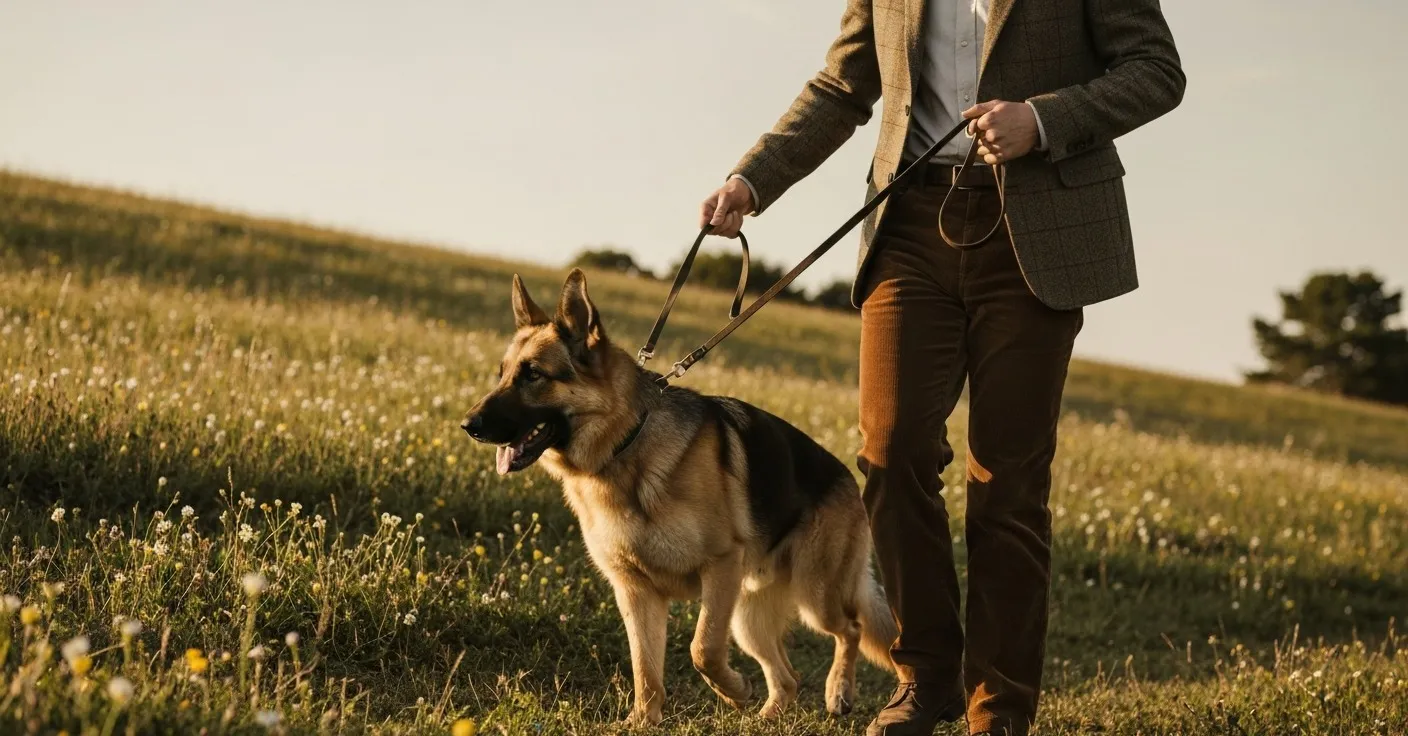
The simplest intervention is often underestimated. A structured leash walk isn’t just cardiovascular exercise — when it incorporates elevation changes, it becomes active hindquarter training.
Hills and inclines recruit the gluteal muscles, hamstrings, and lumbar paraspinals that tend to atrophy earliest in senior dogs. Gentle uphill walking on a short leash, where you control the pace and prevent lunging or rushing, creates meaningful muscular demand without joint-destructive impact.
Start with 10–15 minutes per session, two sessions daily, on a surface with at least one moderate incline. Grassy slopes are ideal; avoid loose gravel or uneven terrain until your dog’s balance and confidence are established. Progress to 20–25 minutes by week three. The pace should be deliberate — not a casual sniff-and-wander, but a purposeful, forward-moving walk where your dog is actively engaged with the terrain.
Exercise 2: Sit-to-stand repetitions
This is the canine equivalent of a squat. Done correctly, it’s one of the most effective exercises for rebuilding hindquarter mass in senior dogs, targeting the quadriceps, gluteals, and hamstrings through a controlled range of motion.
The technique matters. Ask your dog to sit from a standing position, then return to a stand. The movement should be smooth and symmetrical — watch that the dog doesn’t lean to one side or “cheat” by using the floor as a prop. Do not allow them to flop into the sit; the descent should be controlled.
Start with three sets of five repetitions, with a full rest between sets. Progress to five sets of eight by week four. Stop if your dog begins to shift weight asymmetrically, shows any reluctance, or if the movement quality deteriorates. Quality over quantity — three clean repetitions are worth more than ten sloppy ones.
Exercise 3: Weight shifting on unstable surfaces
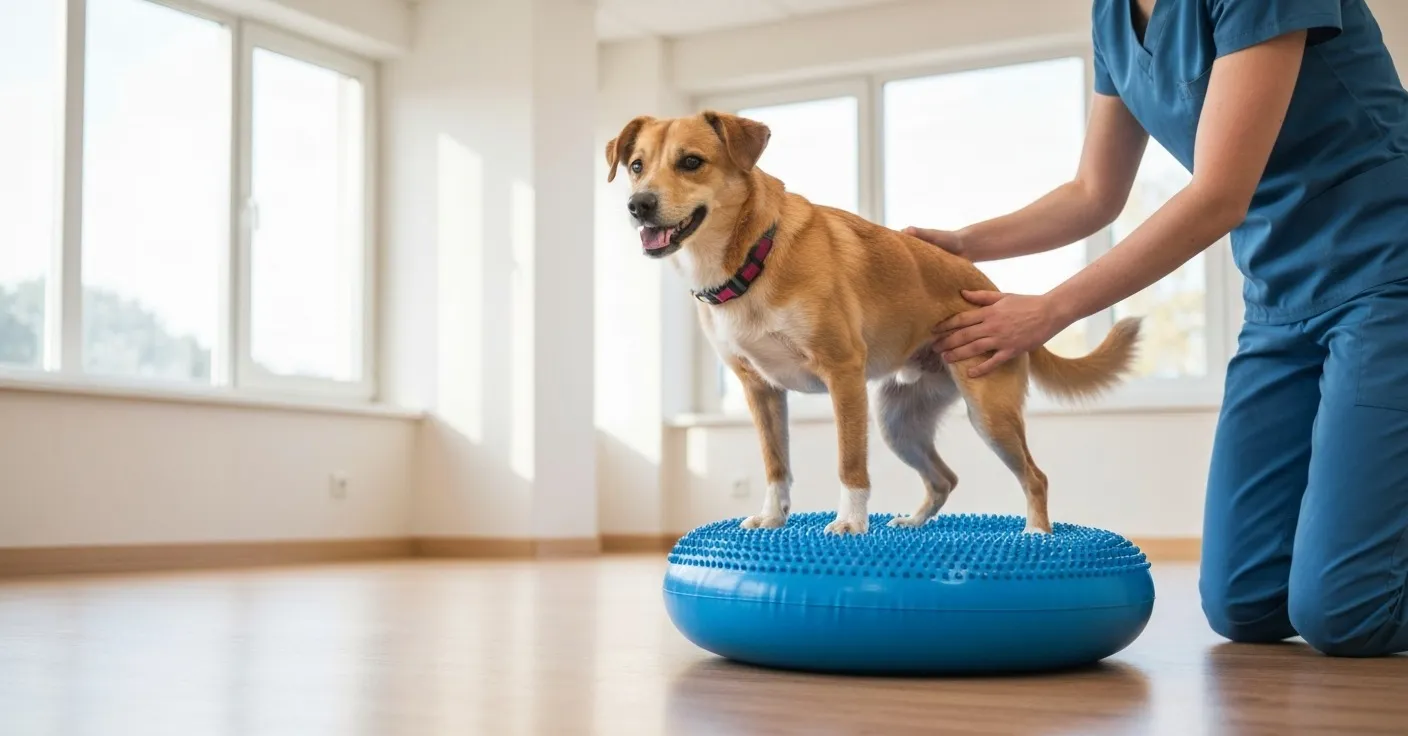
Balance discs, wobble boards, and air-filled cushions look like toys. They aren’t. Standing on an unstable surface forces the recruitment of deep stabilizer muscles that conventional exercise doesn’t reach — the muscles around the hip, stifle, and hock that maintain joint integrity and proprioception.
Proprioception is the body’s sense of joint position, and it declines with age. Dogs with poor proprioception compensate in ways that overload other structures. Improving it reduces the risk of falls and improves movement quality across every other exercise.
Start by having your dog stand with just the rear feet on a balance disc for 30 seconds. Build to 60 seconds, then introduce slight weight shifts by gently pressing on the dog’s hip. Progress to all four feet on the surface. Always have a hand ready to stabilize. Sessions should feel like controlled challenges, not struggles.
Tomlinson & McGee (2008) describe unstable surface training as a foundational tool in canine therapeutic exercise, particularly for dogs with neurological deficits or postoperative weakness — the same mechanisms apply to sarcopenic seniors.
Exercise 4: Cavaletti pole work
Cavaletti poles are low rails (initially on the ground, raised to a few inches as the dog progresses) placed in a line for the dog to step over. They look simple. The effect on limb awareness, hip flexion, and lateral stability is substantial.
Each step over a pole requires the dog to deliberately lift each limb, engaging the hip flexors and increasing the range of motion compared to flat walking. This retrains the neuromuscular pattern that age and disuse have degraded.
Start with four to six poles on the ground, spaced at a distance roughly equal to your dog’s natural stride length. Walk through slowly on leash. Once your dog navigates confidently without touching the poles, raise them to two to three inches. Add poles, increase height gradually, or introduce a slight curve to the arrangement as fitness improves. Two to three passes per session is sufficient initially; work up to five to six passes.
Exercise 5: Hydrotherapy / underwater treadmill
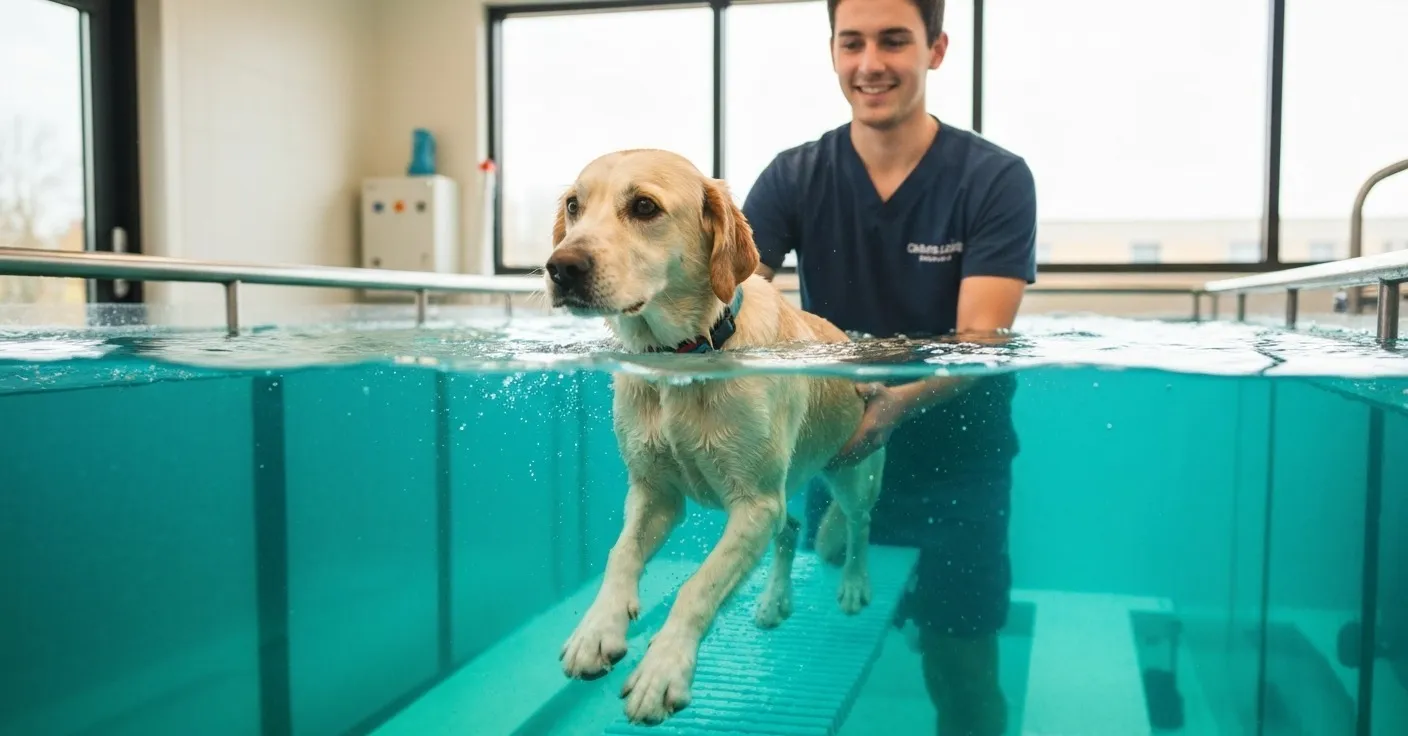
If there’s a gold standard for sarcopenic senior dogs, it’s the underwater treadmill. Full stop.
Here’s why: water provides resistance (making muscles work harder than they would in air at the same speed) while simultaneously unloading the joints through buoyancy. A dog walking on an underwater treadmill with water at mid-chest height bears roughly half its body weight through its legs compared to walking on land. That means the muscles work, the joints don’t suffer, and the dog can sustain effort that would be impossible or painful on dry ground.
Levine et al. (2014) confirmed that partial immersion in water significantly reduces vertical ground reaction forces in dogs — the same forces that cause articular cartilage stress. This makes hydrotherapy uniquely valuable for dogs who can’t tolerate land-based loading due to arthritis or joint disease.
Not every clinic offers an underwater treadmill, but veterinary rehabilitation centers, canine hydrotherapy facilities, and some specialty vet practices do. If it’s accessible, prioritize it from week five onward. A 15–20 minute session, two to three times per week, delivers results that are difficult to replicate with any other single modality.
Exercise 6: Gentle incline walking
Separate from standard leash walks, dedicated incline sessions on a ramp or consistent slope focus specifically on hindquarter drive — the pushing power that senior dogs lose first.
Forward movement up a ramp places sustained demand on the gluteals and hamstrings in a way flat walking doesn’t. The controlled descent is equally important: it loads the quadriceps eccentrically, which is one of the most effective stimuli for muscle fiber remodeling.
Use a ramp with good traction. Start with a gentle angle — no more than 15 degrees — and walks of two to three minutes. Progress the angle or duration, not both simultaneously. Descending should be as slow and controlled as ascending; don’t let your dog rush down.
Nutrition as the other half of the equation
Exercise without adequate nutrition is a losing equation for a senior dog. The exercise provides the stimulus for protein synthesis; dietary protein provides the raw material. Without sufficient leucine — the branched-chain amino acid most directly responsible for triggering muscle protein synthesis — the anabolic signal from exercise goes unanswered at the cellular level.
Senior dogs need protein, not less of it. The old advice to restrict protein in older dogs to protect the kidneys has been largely revised; current evidence supports higher-quality, leucine-rich protein for healthy senior dogs rather than restriction (Freeman, 2012). If your dog has chronic kidney disease, this changes — consult your vet about protein levels specifically.
Beyond dietary protein, targeted nutritional support may help. Petterm Muscle Gain Soft Chews contain HMB (beta-hydroxy beta-methylbutyrate), creatine, and a targeted amino acid profile designed to support muscle maintenance in dogs — ingredients that may help the muscle-building response when combined with regular exercise. Pair them with adequate dietary protein, not as a replacement for it.
For more on managing body composition in dogs who’ve lost significant lean mass, see our guide on muscle loss in senior dogs.
A sample 8-week protocol
This framework assumes vet clearance has been obtained and no contraindications exist.
Weeks 1–2: Two controlled leash walks per day (15 minutes each, incorporating one hill or incline). Sit-to-stand repetitions: three sets of five, once daily. Focus on movement quality over distance or rep count.
Weeks 3–4: Extend walks to 20 minutes. Increase sit-to-stands to five sets of six. Introduce balance disc work: two sessions per week, 30–60 seconds per set.
Weeks 5–6: Add cavaletti pole work two to three times per week (four to six poles, three to four passes per session). Continue balance work. If hydrotherapy is available, add two underwater treadmill sessions per week at 15 minutes each.
Weeks 7–8: Introduce dedicated incline ramp sessions (two to three minutes, two times daily). Increase hydrotherapy to three sessions per week if tolerated. Consolidate all other exercises at established levels rather than adding new load.
Reassess muscle condition by measuring thigh circumference and comparing to baseline photos at the end of week eight. Most dogs show visible improvement. Progress more slowly than this plan suggests if your dog shows any signs of soreness or reluctance.
Signs you’re pushing too hard
Enthusiasm is understandable. It’s also the most common way this kind of program goes wrong.
Watch for limping or favoring a limb during or after a session. That’s a stop sign, not a push-through moment. Watch for reluctance to start a session the next day — a dog that was engaged yesterday and doesn’t want to get up today is telling you something. Watch for vocalizing during a movement that was quiet before.
Post-exercise stiffness that resolves within an hour is normal and expected. Stiffness that persists to the next morning isn’t. Reduce duration and intensity by 30%, maintain that level for a week, and reassess.
Frequently asked questions
At what age is a dog considered “senior” for exercise purposes? It depends on breed and size. Large and giant breeds are often considered senior by age seven; small breeds may not show significant aging changes until nine or ten. Your vet can assess your dog’s biological age based on a physical exam rather than just the calendar.
Can a dog with hip dysplasia do these exercises? Some can, with modification. A dog with controlled, mild hip dysplasia may tolerate hydrotherapy and balance work well. A dog with severe dysplasia may need a rehabilitation specialist to design a modified protocol. Don’t assume either way — get a professional assessment.
How long before we see results? Most owners report visible changes in muscle fullness and movement quality by weeks four to six. Measurable improvements in thigh circumference are typically evident by week eight in dogs who are exercising consistently and eating adequate protein.
Is swimming as good as an underwater treadmill? Open water swimming is cardiovascular exercise but doesn’t generate the same controlled resistance as a treadmill session. It’s beneficial, but it’s harder to control the load and progression. Use it as a complement if the treadmill isn’t accessible.
My dog refuses to step on the balance disc. What should I do? Start by placing treats on the disc and letting your dog investigate it without any requirement to stand on it. Once the dog is comfortable pawing at it, reward one foot on the disc. Build to two feet, then all four, over several sessions. Don’t rush the habituation phase.
Can I do this program at home without professional guidance? The basic exercises — leash walks, sit-to-stands, and cavaletti poles — are safe to do at home once you’ve had vet clearance and understand the technique. Balance disc work and hydrotherapy benefit significantly from professional oversight, at least initially.
How does this program interact with arthritis medication? If your dog is on NSAIDs or other pain management for arthritis, exercise is still appropriate and important. The medication manages pain that would otherwise limit movement; the exercise maintains the muscle that protects the joint. They work together. Don’t stop medication to “see how the dog does” without vet direction.
What if my dog has had orthopedic surgery recently? Post-surgical rehabilitation is a specialized field. A veterinary rehabilitation practitioner should be designing and supervising any exercise program for a post-op dog. The exercises described here are for generally healthy senior dogs — they are not post-surgical protocols.
When to contact your veterinarian
These are exercise guidelines for generally healthy senior dogs. They are not a substitute for veterinary medical care.
Contact your vet before starting if: your dog has a diagnosed orthopedic condition (hip or elbow dysplasia, cruciate disease, spinal problems), has had orthopedic or spinal surgery in the past twelve months, has a known or suspected cardiac condition, or hasn’t had a geriatric wellness examination in the past year.
Stop a session and contact your vet if: your dog develops a sudden limp during or immediately after exercise. Also stop and call if your dog shows a significant pain response — crying, refusing to bear weight, guarding a limb. Any new neurological signs — stumbling, falling, knuckling of the paws, loss of bladder or bowel control — require same-day veterinary attention, not a watchful wait.
When in doubt, err on the side of caution. A brief vet check costs far less than treating an injury that results from ignoring a warning sign.
References
- Millis, D.L. & Levine, D. (2014). Canine Rehabilitation and Physical Therapy. 2nd ed. Elsevier.
- Levine, D., Marcellin-Little, D.J., & Millis, D.L. (2014). Effects of partial immersion in water on vertical ground reaction forces and weight distribution in dogs. Am J Vet Res, 71(12), 1413–1416.
- Tomlinson, J. & McGee, H. (2008). Canine therapeutic exercises. Vet Clin North Am Small Anim Pract, 38(5), 1221–1242.
- Freeman, L.M. (2012). Cachexia and sarcopenia: emerging syndromes of importance in dogs and cats. J Vet Intern Med, 26(1), 3–17.
- Hutchinson, D., Sutherland-Smith, J., & Watson, A. (2012). Assessment of methods of evaluating sarcopenia in old dogs. Am J Vet Res, 73(11), 1794–1800.
This article is for educational purposes and is not veterinary medical advice. Petterm products are not intended to diagnose, treat, cure, or prevent any disease. Results may vary. Always consult your veterinarian before starting a new exercise protocol, especially if your dog has an existing orthopedic or cardiac condition.