


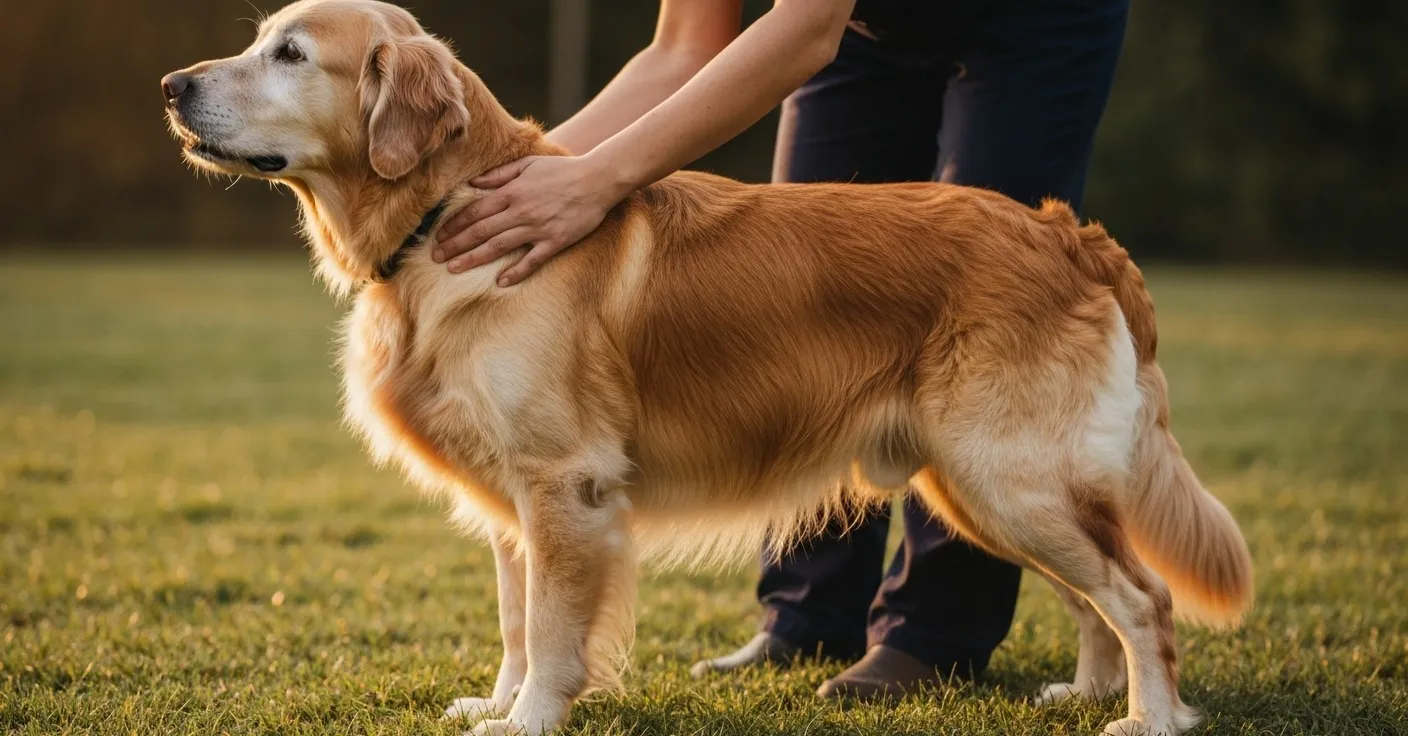
I noticed it first in the stairs. My parents’ twelve-year-old German Shepherd, a dog that used to launch herself up the staircase in three bounds, started hesitating at the bottom. Then pausing halfway. Then avoiding stairs entirely if she could route around them.
The vet confirmed what we suspected: sarcopenia, the progressive loss of skeletal muscle mass associated with aging. Her hindquarters, once thick with muscle, had visibly thinned. She wasn’t in pain, exactly, but she was losing the physical infrastructure that allowed her to move confidently through the world.
This is a common story. Muscle loss in senior dogs is not a disease in itself; it’s a natural consequence of aging that intersects with nutrition, activity level, hormonal changes, and sometimes underlying illness. But “natural” doesn’t mean “inevitable in its severity,” and there are meaningful interventions available if you catch it early enough.
What is sarcopenia, and how common is it?
Sarcopenia describes the age-related decline in skeletal muscle mass, strength, and function. The term was originally defined in human geriatric medicine (Rosenberg, 1997) and has since been adopted in veterinary literature to describe an analogous process in companion animals.
In dogs, muscle mass begins to decline measurably around seven to eight years of age, though the onset and rate vary significantly by breed and size. A 2017 study using dual-energy X-ray absorptiometry (DEXA) found that dogs over eight years had significantly lower lean body mass percentages compared to younger adults, even when body weight remained stable (Freeman et al., 2017). That last point matters: your senior dog might weigh the same as she did at five, but the composition has shifted, less muscle, more fat.
Large and giant breeds tend to show earlier and more pronounced muscle loss, partly because their musculoskeletal systems bear greater mechanical loads throughout life, accelerating wear-related changes in the joints and tendons that support muscle function (Kealy et al., 2002).
Why muscles atrophy with age
Several overlapping mechanisms drive age-related muscle loss in dogs. Understanding them helps explain why no single intervention is sufficient and why a combined approach works best.
Reduced protein synthesis
Aging cells become less efficient at building new protein. The mTOR signaling pathway, which regulates muscle protein synthesis in response to amino acids and mechanical stimulus, shows reduced sensitivity in older animals (Dickinson et al., 2011). This means a senior dog needs more dietary protein per kilogram of body weight to maintain the same muscle mass, not less.
This is counterintuitive and contradicts older veterinary guidance that recommended reducing protein intake for senior dogs. Current consensus, reflected in guidelines from the American College of Veterinary Internal Medicine, supports maintaining or increasing protein intake in healthy older dogs, as long as renal function is normal (Churchill, 2017).
Chronic low-grade inflammation
Aging is associated with a state of chronic, low-level systemic inflammation sometimes called “inflammaging.” Elevated circulating levels of pro-inflammatory cytokines, including interleukin-6 (IL-6) and tumor necrosis factor alpha (TNF-alpha), directly inhibit muscle protein synthesis and promote protein breakdown (Schaap et al., 2006).
Omega-3 fatty acids, specifically EPA and DHA from marine sources, have demonstrated anti-inflammatory properties in both human and canine models. A randomized controlled trial in dogs with osteoarthritis showed that omega-3 supplementation reduced inflammatory markers and improved mobility (Roush et al., 2010).
Hormonal changes
Declines in growth hormone, insulin-like growth factor 1 (IGF-1), and testosterone all contribute to reduced anabolic capacity in aging dogs. These changes are largely unavoidable, but their impact can be partially offset by maintaining adequate protein and amino acid intake, which provides the raw substrate for whatever anabolic signaling remains active.
Reduced physical activity
This one creates a vicious cycle. Muscle loss reduces mobility and comfort, which reduces willingness to exercise, which accelerates further muscle loss. A dog that was walking three miles a day at age six may be doing half that at ten, not because she’s fundamentally incapable, but because subtle discomfort and reduced confidence have gradually shortened the route.
Breaking this cycle requires intentional, structured activity that works within the dog’s current capacity rather than demanding what she used to do.
How to spot muscle loss early
By the time most owners notice muscle loss, the process is already well advanced. Earlier detection gives you more to work with. Here’s what to watch for:
Visual indicators
- Prominence of bony landmarks. The spine, hip bones, and scapulae (shoulder blades) become more visible as the overlying muscle thins. In heavy-coated breeds, run your hands along these areas rather than relying on sight alone.
- Temporal muscle wasting. The muscles above the eyes (temporalis muscles) are among the first to show age-related loss. If the top of the skull looks concave or sunken between the eyes and ears, temporal wasting is occurring.
- Hindquarter narrowing. The thigh and hip muscles are the largest muscle groups in the body and often show the most dramatic changes. Compare your dog’s hindquarter profile now to photos from two or three years ago.
Functional indicators
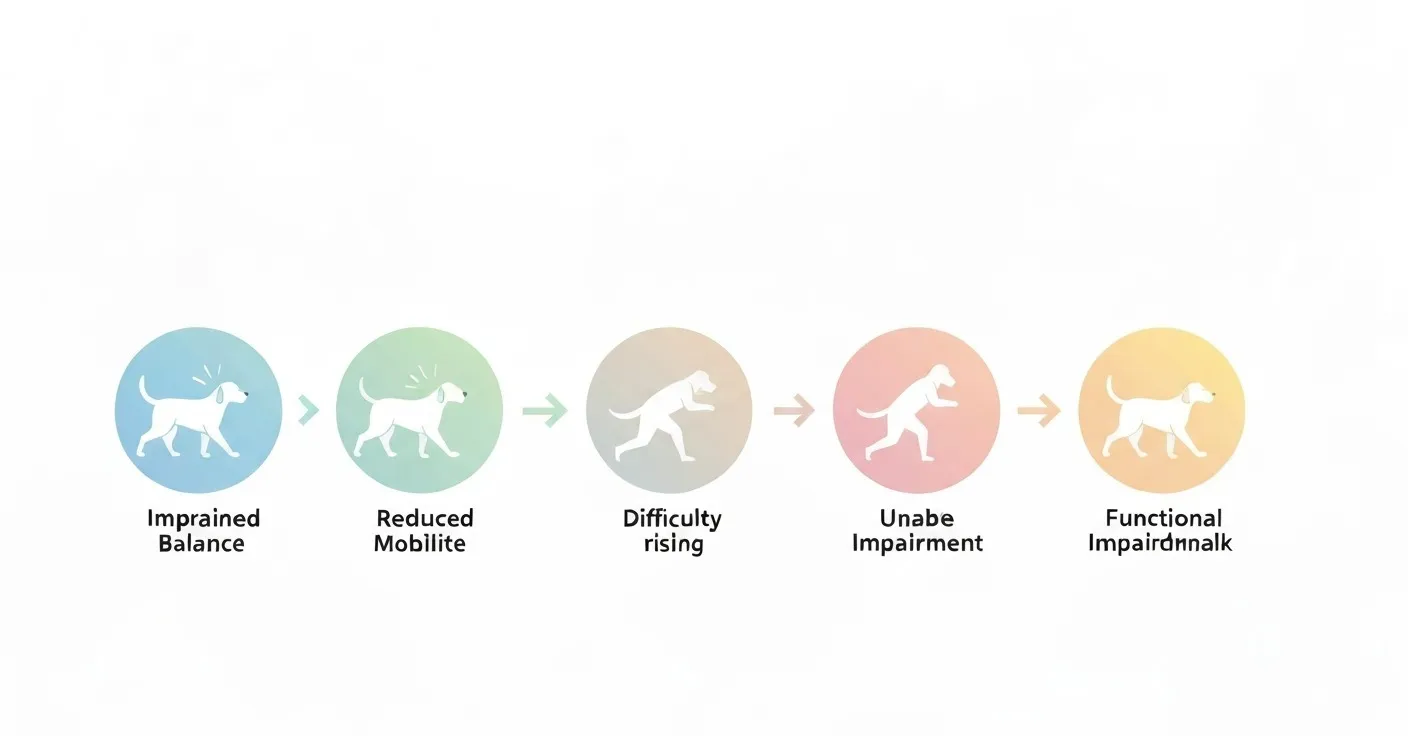
- Difficulty rising from a lying position, particularly on smooth floors
- Hesitation at stairs, curbs, or getting into the car
- Reduced endurance on walks (stopping sooner, lying down during walks)
- Bunny-hopping gait (using both rear legs simultaneously rather than alternating)
- Trembling in the hindquarters after standing for extended periods
Body condition scoring
The World Small Animal Veterinary Association (WSAVA) publishes standardized body condition score charts for dogs on a 1-9 scale. But body condition scoring alone can miss sarcopenic obesity, where fat replaces muscle, keeping overall body weight stable. A muscle condition score, which specifically evaluates muscle mass over the temporal bones, scapulae, spine, and pelvis, provides additional information (Freeman et al., 2011).
Ask your veterinarian to assess both body condition and muscle condition at each annual or semi-annual wellness visit.
Nutritional strategies for preserving and rebuilding muscle
Protein quantity and quality
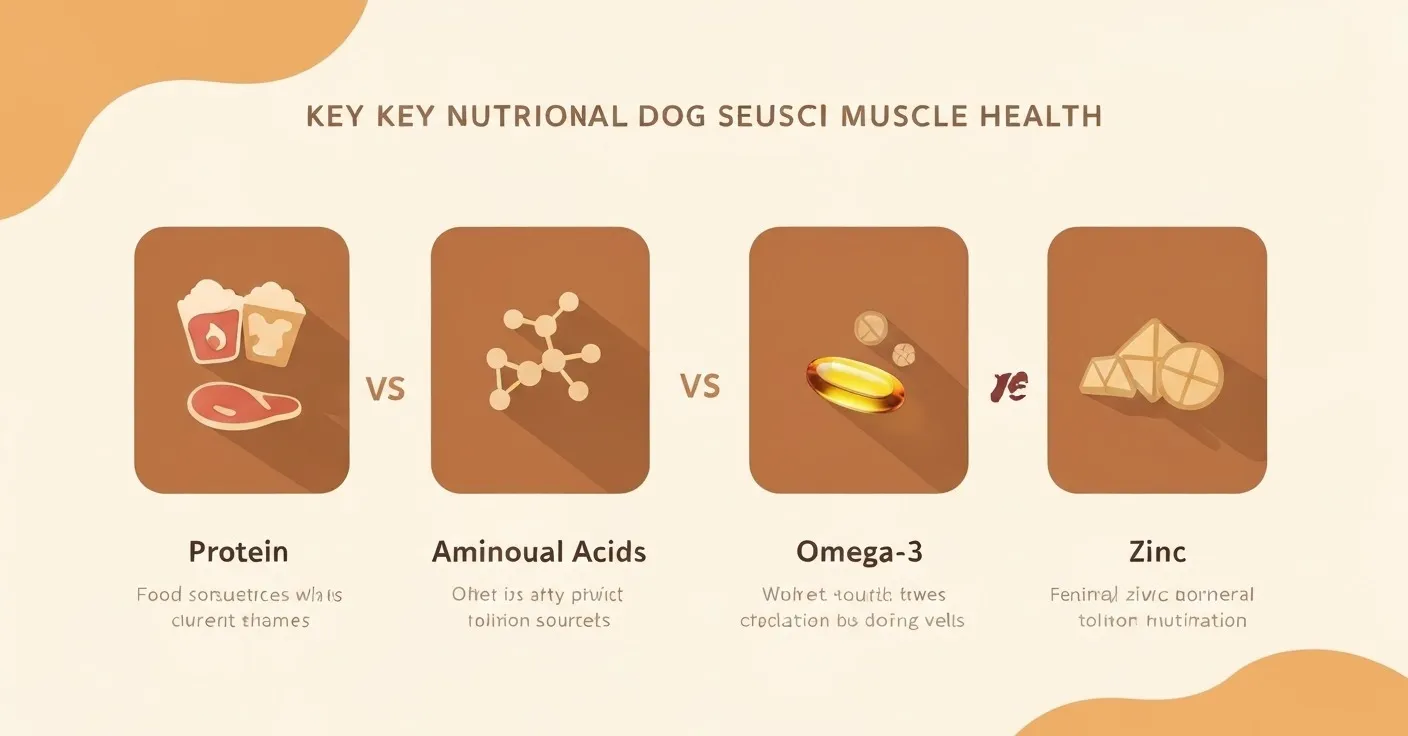
The single most impactful dietary change for a sarcopenic dog is ensuring adequate high-quality protein. Research suggests senior dogs may need 50% more protein per kilogram of body weight than younger adults to maintain nitrogen balance (Wannemacher & McCoy, 1966, with subsequent confirmation in more recent studies).
Not all protein is equivalent. Animal-source proteins (meat, eggs, dairy) provide a complete amino acid profile with higher digestibility than plant-based alternatives. Whey protein, in particular, has a rapid absorption profile and is rich in leucine, the amino acid most directly responsible for stimulating the mTOR pathway and initiating muscle protein synthesis (Bauer et al., 2013).
Amino acid supplementation
When dietary protein alone isn’t achieving adequate results, targeted amino acid supplementation can help:
- Leucine is the primary trigger for muscle protein synthesis. It works by directly activating mTOR signaling in skeletal muscle.
- L-Arginine supports nitric oxide production, which improves blood flow to muscles during exercise, enhancing nutrient delivery and waste removal.
- L-Lysine participates in collagen synthesis and calcium absorption, both relevant to the musculoskeletal system.
- Branched-chain amino acids (BCAAs), including leucine, isoleucine, and valine, are preferentially metabolized in muscle tissue rather than the liver, making them directly available for muscle repair.
Petterm Muscle Gain Soft Chews were designed around this evidence base, providing 800 mg of whey protein concentrate alongside L-Arginine, L-Histidine, Isoleucine, Leucine, and L-Lysine per serving. The soft chew format also includes 180 mg of omega-3 fatty acids and 15 mg of zinc to address the inflammatory and immune dimensions of muscle maintenance.
Omega-3 fatty acids
Beyond their anti-inflammatory role, omega-3s may have a direct anabolic effect on muscle. A study in older adults (human data, as canine-specific studies are limited) found that omega-3 supplementation enhanced the muscle protein synthesis response to amino acid and insulin infusion (Smith et al., 2011). While direct extrapolation to dogs requires caution, the mechanistic rationale is sound, and omega-3 supplementation is already well-supported for joint health and cognitive function in senior dogs.
Zinc
Zinc is a cofactor for over 300 enzymatic reactions, including those involved in protein synthesis and cell division. Marginal zinc deficiency, which is difficult to diagnose but common in older animals, can impair wound healing, immune function, and muscle repair capacity (Prasad, 2008). Supplementation at moderate levels helps ensure this bottleneck is removed.
Exercise protocols for senior dogs with muscle loss
Exercise is the other half of the equation. Nutrition provides the building blocks; physical activity provides the mechanical stimulus that tells the body to build rather than break down muscle.
Principles
-
Consistency over intensity. Three twenty-minute walks per day are more beneficial than one hour-long session that leaves the dog stiff the next day.
-
Progressive loading. Start from where the dog is now, not where she used to be. If she’s comfortable walking for ten minutes, start there and add two minutes per week.
-
Include inclines. Walking uphill engages the hindquarter muscles more intensely than flat-ground walking. Even gentle slopes make a measurable difference in muscle activation (Millard et al., 2010).
-
Controlled sit-to-stand exercises. This is the canine equivalent of a squat. Asking a dog to sit and then stand repeatedly (five to ten repetitions, two to three times daily) recruits the quadriceps and hamstrings in a controlled way. Use a treat to guide the motion and ensure the dog sits squarely rather than favoring one side.
-
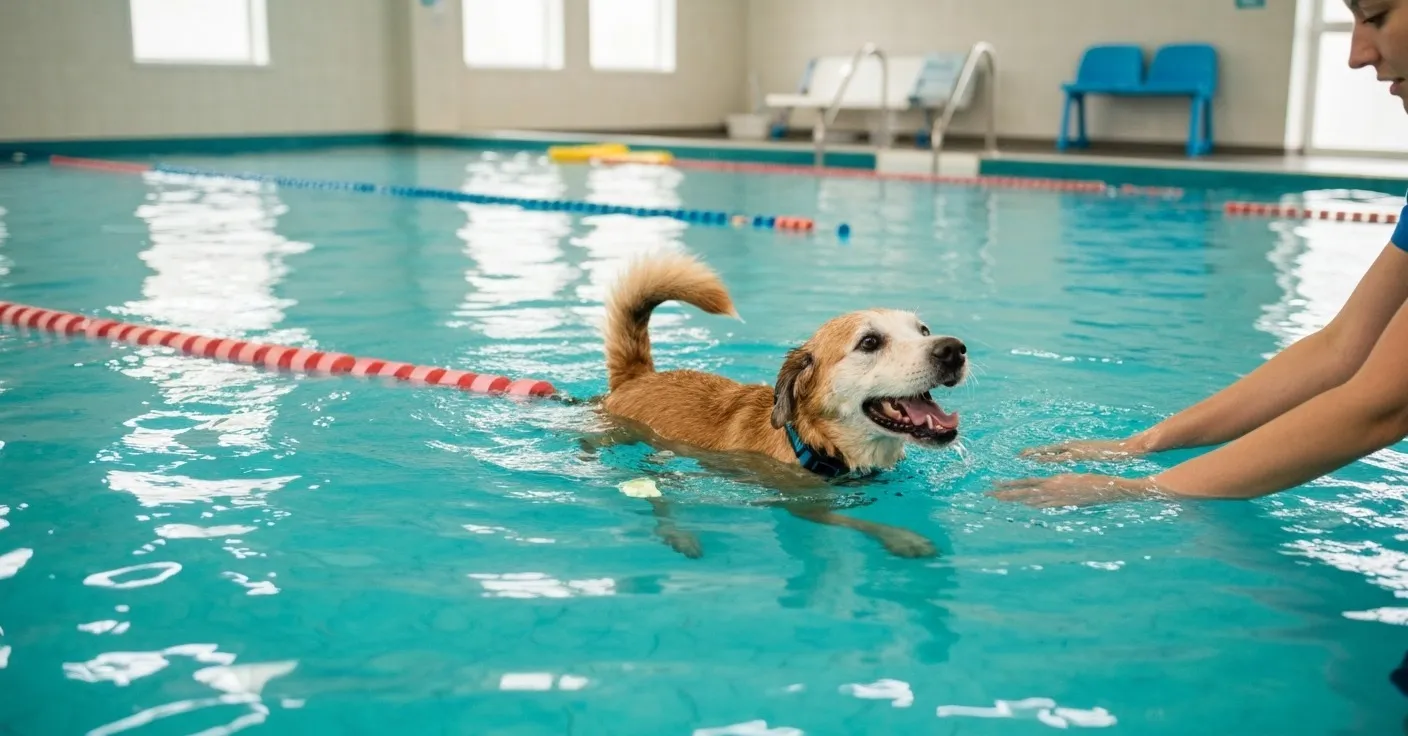
Swimming or underwater treadmill. Hydrotherapy provides resistance without impact, making it ideal for dogs with concurrent joint disease. The buoyancy of water reduces gravitational load on joints while the resistance builds muscle. If you have access to a veterinary rehabilitation facility, this is among the most effective interventions available for canine sarcopenia.
What to avoid
- Forced running on hard surfaces, especially in dogs with joint disease
- Jumping (on and off furniture, in and out of vehicles) without assistance
- Weekend warrior patterns, long inactive periods followed by intense bursts, which increase injury risk
Interested in how nutrition and exercise work together for dogs recovering from weight loss? Our guide on protein for dogs — how much, which sources, and the muscle math dives deeper into the caloric and macronutrient side of the equation.
When muscle loss signals something more serious
While sarcopenia is the most common cause of gradual muscle loss in senior dogs, other conditions can produce similar or more rapid atrophy:
- Degenerative myelopathy. A progressive spinal cord disease most common in German Shepherds, Corgis, and Boxers. Muscle wasting, particularly in the hindquarters, is an early sign (Coates & Wininger, 2010).
- Cushing’s disease (hyperadrenocorticism). Excess cortisol breaks down muscle protein. Affected dogs often show a pot-bellied appearance with simultaneous muscle wasting.
- Myasthenia gravis. An autoimmune condition affecting the neuromuscular junction. Focal forms may cause selective muscle weakness and atrophy.
- Cancer cachexia. Muscle wasting associated with malignancy, mediated by tumor-derived inflammatory factors.
- Chronic kidney disease. Uremic toxins and metabolic acidosis both promote muscle protein catabolism.
If muscle loss is rapid (weeks rather than months), asymmetric (one leg more than others), or accompanied by other systemic signs (increased thirst, appetite changes, lethargy, neurological deficits), a veterinary workup is essential. Blood panels, urinalysis, imaging, and potentially electromyography can help differentiate sarcopenia from pathological causes.
Final thoughts
Watching a dog lose the physical capability she once had is one of the harder parts of owning an aging pet. But muscle loss in senior dogs isn’t a switch that flips; it’s a gradual process with intervention points along the way.
The evidence supports a three-pronged approach: adequate high-quality protein and amino acid intake, structured and progressive physical activity, and attention to the inflammatory and micronutrient factors that either support or undermine muscle maintenance. No single element works in isolation; the compounding effect of all three is where the meaningful changes happen.
Start with where your dog is today. Measure what you can. Adjust as you go. And work with your veterinarian to rule out underlying conditions that might be accelerating the process beyond what age alone would explain.
Frequently asked questions
At what age should I start worrying about muscle loss?
Monitoring should begin around seven years for large breeds and eight to nine years for medium and small breeds. “Worrying” isn’t the right framing; “paying attention” is. Baseline photos, regular body and muscle condition scoring, and attention to functional changes are the tools.
Can a senior dog actually build new muscle, or just slow the loss?
Both are possible. The degree of rebuilding depends on the severity of existing loss, the dog’s overall health, hormonal status, and the consistency of the exercise and nutrition program. Dogs with mild to moderate sarcopenia that receive adequate protein, targeted amino acid supplementation, and structured exercise can show measurable improvements in lean body mass (Wakshlag et al., 2012).
How much protein does a senior dog need?
Current recommendations suggest at least 25% of calories from protein for healthy senior dogs, and potentially more for those actively rebuilding muscle (Churchill, 2017). Your veterinarian can help determine the appropriate target based on your dog’s kidney function, body condition, and activity level.
Are muscle gain supplements safe for dogs with kidney disease?
High-protein diets and amino acid supplements require caution in dogs with compromised renal function. If your dog has been diagnosed with kidney disease, consult your veterinarian before increasing protein intake or adding supplements like Petterm Muscle Gain Soft Chews. Blood work to assess kidney values (BUN, creatinine, SDMA) should guide dietary decisions.
What about glucosamine and joint supplements?
Joint supplements address a different but related problem. If muscle loss is partly driven by joint pain that limits activity, then addressing joint comfort can indirectly support muscle preservation by enabling the dog to exercise more consistently. Many dogs benefit from both joint support and muscle-focused supplementation.
Is swimming really better than walking for senior dogs?
For dogs with significant joint disease, yes. Hydrotherapy provides muscle-building resistance with dramatically reduced joint impact. For dogs with healthy joints, walking (especially on varied terrain and inclines) is highly effective and more accessible. The best exercise is the one you’ll do consistently.
When to contact your veterinarian
A nutrition-and-exercise routine is the right tool for age-related muscle decline. It isn’t the right tool when something else is driving the loss.
Watch and support at home if: your senior dog shows gradual, symmetric thinning across the hindquarters, temporalis muscles, or along the spine, without pain, weight loss, or behavioral change. Re-check monthly with photos and body/muscle condition scoring.
Call your vet within 24–48 hours if: muscle loss is accelerating faster than you’d expect, body weight is dropping without a diet change, appetite has shifted, thirst or urination patterns are changing, or your dog is slowing noticeably inside a week or two.
Seek veterinary care the same day if: loss is clearly asymmetric (one leg visibly thinner than the other), you see weakness or stumbling, there are neurological signs (knuckling, dragging a paw, head tilt), signs of pain on rising, or a sudden change in mental status. The differentials listed above — degenerative myelopathy, Cushing’s, myasthenia gravis, cancer cachexia, chronic kidney disease — all deserve early workup.
References
-
Rosenberg, I.H. (1997). “Sarcopenia: origins and clinical relevance.” Journal of Nutrition, 127(5), 990S-991S.
-
Freeman, L.M., et al. (2017). “Body composition in senior dogs: a cross-sectional study.” Journal of Veterinary Internal Medicine, 31(S1), 81.
-
Kealy, R.D., et al. (2002). “Effects of diet restriction on life span and age-related changes in dogs.” Journal of the American Veterinary Medical Association, 220(9), 1315-1320.
-
Dickinson, J.M., et al. (2011). “Aging differentially affects human skeletal muscle amino acid transporter expression when essential amino acids are ingested after exercise.” Clinical Nutrition, 30(5), 630-636.
-
Churchill, J.A. (2017). “Increase in senior and geriatric pet patients: nutrition in the senior years.” Veterinary Clinics of North America: Small Animal Practice, 47(3), 701-712.
-
Schaap, L.A., et al. (2006). “Inflammatory markers and loss of muscle mass and strength.” American Journal of Medicine, 119(6), 526.e9-526.e17.
-
Roush, J.K., et al. (2010). “Evaluation of the effects of dietary supplementation with fish oil omega-3 fatty acids on weight bearing in dogs with osteoarthritis.” Journal of the American Veterinary Medical Association, 236(1), 67-73.
-
Bauer, J., et al. (2013). “Evidence-based recommendations for optimal dietary protein intake in older people.” Journal of the American Medical Directors Association, 14(8), 542-559.
-
Smith, G.I., et al. (2011). “Omega-3 polyunsaturated fatty acids augment the muscle protein anabolic response to hyperinsulinaemia-hyperaminoacidaemia in healthy young and middle-aged men and women.” Clinical Science, 121(6), 267-278.
-
Prasad, A.S. (2008). “Zinc in human health: effect of zinc on immune cells.” Molecular Medicine, 14(5-6), 353-357.
-
Millard, R.P., et al. (2010). “Kinematic analysis of the walk and trot of healthy dogs on a flat surface and an inclined surface.” American Journal of Veterinary Research, 71(7), 734-740.
-
Coates, J.R. & Wininger, F.A. (2010). “Canine degenerative myelopathy.” Veterinary Clinics of North America: Small Animal Practice, 40(5), 929-950.
-
Wakshlag, J.J., et al. (2012). “The role of nutrition in canine performance and rehabilitation.” Topics in Companion Animal Medicine, 27(3), 97-105.
Researched and reviewed by the Petterm Editorial Team · Last reviewed April 2026
This article is for educational purposes and is not veterinary medical advice. Petterm products are not intended to diagnose, treat, cure, or prevent any disease. Results may vary. Always consult your veterinarian before introducing a new supplement, especially if your dog has an existing condition (particularly kidney disease), takes medication, is pregnant, or is under 12 weeks old.